Can a Regular Person Get a BLS Certification in Washington?

Yes, a regular person can get BLS certification in Washington. You don’t need to be a healthcare professional or have prior medical experience. BLS training covers CPR, AED use, rescue breathing, choking response, and other lifesaving skills. However, check your employer or school’s requirements to ensure you choose an accepted BLS course.

How to Put CPR Certification on a Resume?

The best way to put CPR certification on a resume is to list it in a dedicated Certifications section. Include the official certification name, issuing organization, date earned, and expiration date when applicable.

Is CPR Training Hard?

CPR training is not difficult for most people. With step-by-step instruction and hands-on practice, beginners can learn CPR, AED use, and emergency response skills in a few hours.

What to Wear to a CPR Class in Washington?

Wear comfortable, flexible clothing and supportive closed-toe shoes to a CPR class in Washington. Avoid restrictive clothing, open-toe shoes, bulky layers, and large accessories so you can move freely during hands-on CPR practice.

Benefits of CPR Training in Washington

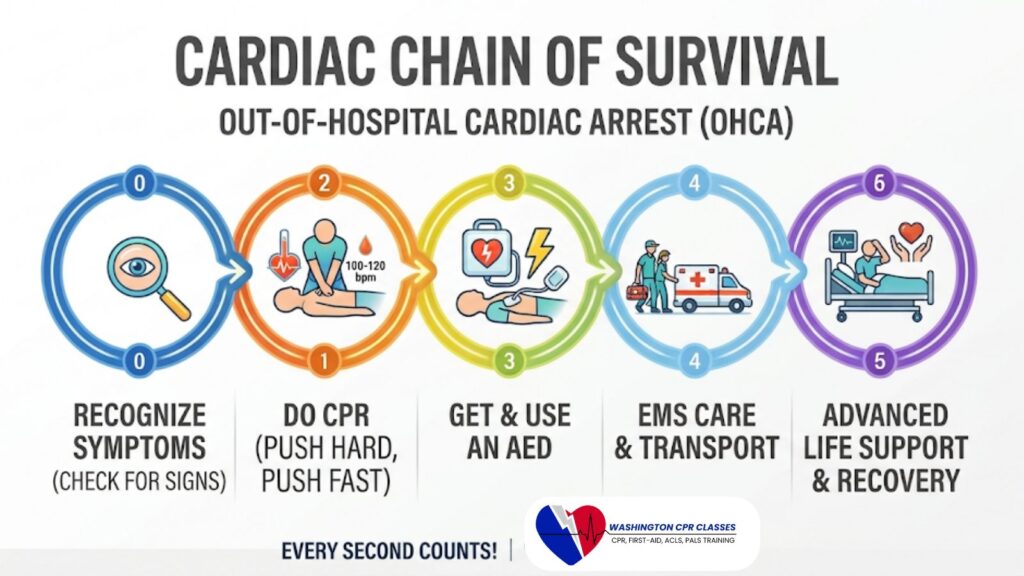
CPR training in Washington teaches people how to recognize cardiac emergencies, perform high-quality CPR, use an AED, respond to choking, and provide immediate assistance until EMS arrives. It can improve emergency preparedness at home, in workplaces, schools, healthcare settings, and outdoor environments while helping professionals meet CPR or BLS certification requirements.

How to Get BLS Certified in Washington?

To get BLS certified in Washington, enroll in an approved BLS Provider course, complete the required training, and pass the hands-on skills evaluation. American Heart Association (AHA) BLS certification is widely accepted by healthcare employers, schools, and medical organizations.

How Often Should CPR Certification Be Renewed in Washington? 

Most CPR certifications in Washington should be renewed every two years. Certifications issued by organizations such as the American Heart Association (AHA) are typically valid for 24 months. Renewing your certification before it expires helps maintain compliance with employer or licensing requirements, refreshes your lifesaving skills, and ensures you’re up to date with the latest CPR guidelines.