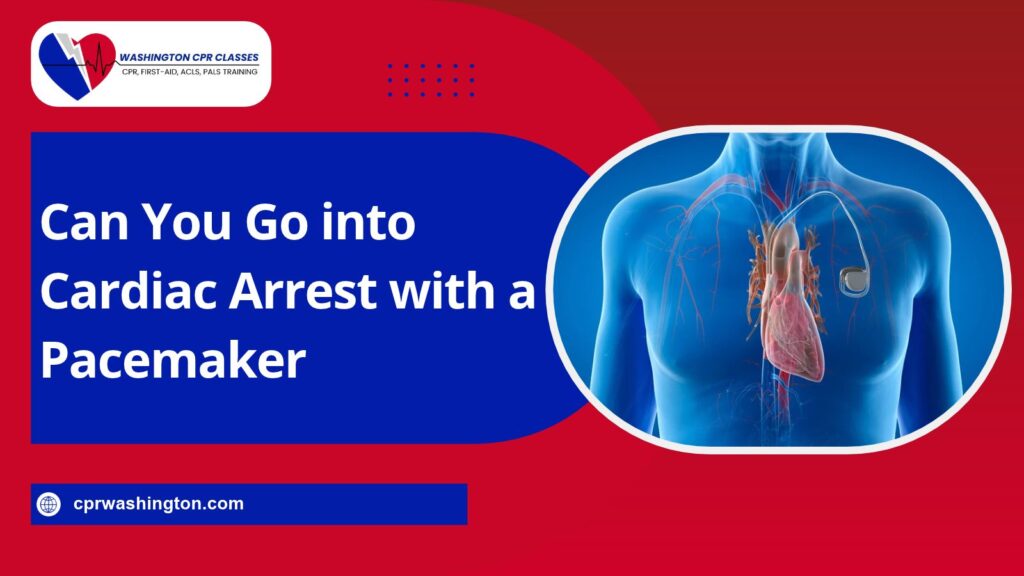
Yes, you can go into cardiac arrest even if you have a pacemaker. A pacemaker helps regulate your heartbeat by sending electrical impulses to support an appropriate heart rate, but it does not prevent every dangerous heart rhythm or every condition that causes cardiac arrest.
Cardiac arrest occurs when the heart suddenly stops pumping blood effectively, preventing oxygen-rich blood from reaching the brain and other vital organs. A person with a pacemaker can still experience cardiac arrest due to ventricular fibrillation, certain types of ventricular tachycardia, a heart attack, or other serious medical conditions.
This guide explains how cardiac arrest can happen with a pacemaker, the warning signs to recognize, and what to do in an emergency.
How Can Cardiac Arrest Happen With a Pacemaker?
Cardiac arrest can occur with a pacemaker because the device treats specific heart rhythm problems rather than every possible cause of cardiac arrest. The underlying heart condition, a new electrical disturbance, or a device-related problem can still interfere with the heart’s ability to pump blood.
Common causes include the following.
Ventricular fibrillation
Ventricular fibrillation (VF) is a life-threatening heart rhythm in which the heart’s lower chambers quiver instead of contracting effectively. As a result, the heart cannot pump enough blood to the brain and other organs.
A standard pacemaker does not deliver the high-energy shock required to treat ventricular fibrillation. Immediate CPR and defibrillation with an AED or manual defibrillator are essential.
Ventricular tachycardia
Ventricular tachycardia (VT) is an abnormally fast heart rhythm that originates in the heart’s lower chambers. Some episodes allow the heart to pump blood, while others severely reduce circulation. When VT occurs without an effective pulse, it is a cardiac arrest rhythm that requires immediate resuscitation and defibrillation.
A standard pacemaker generally does not provide the shock therapy needed to treat dangerous ventricular tachycardia. An implantable cardioverter-defibrillator (ICD) is designed to detect and treat certain life-threatening ventricular arrhythmias.
Heart attack and underlying heart disease
A heart attack occurs when blood flow to part of the heart muscle becomes blocked. The resulting damage can trigger dangerous electrical disturbances, including ventricular fibrillation, and lead to cardiac arrest.
A pacemaker does not prevent coronary artery blockages or eliminate the risk of a heart attack. Other conditions, such as cardiomyopathy and severe heart muscle damage, can also increase the risk of life-threatening arrhythmias.
Pacemaker malfunction
Although pacemakers are designed to function reliably, device-related problems can occur. Examples include:
- Battery depletion: A depleted battery can interfere with pacing, particularly in someone who depends heavily on the device.
- Lead problems: A lead may become displaced, damaged, or unable to deliver electrical impulses properly.
- Sensing or electrical problems: The device may fail to detect or respond to the heart’s electrical activity as intended.
A pacemaker malfunction does not automatically cause cardiac arrest. However, in someone who depends on pacing to maintain an adequate heartbeat, a serious malfunction can cause dangerously slow heart rhythms or a loss of effective circulation.
Other serious medical conditions
Cardiac arrest can also result from severe oxygen deprivation, major blood loss, pulmonary embolism, or significant electrolyte abnormalities. These conditions affect the body’s ability to maintain effective circulation and are not necessarily corrected by a pacemaker.
What Happens When Someone With a Pacemaker Goes Into Cardiac Arrest?
When someone with a pacemaker experiences cardiac arrest, the heart can no longer pump blood effectively enough to sustain the brain and other vital organs. The person typically collapses, loses consciousness, and stops breathing normally or begins gasping.
What happens to the pacemaker depends on the cause of the arrest and the type of implanted device.
- The pacemaker may continue working: The device may continue delivering electrical impulses, but those impulses cannot correct every dangerous rhythm or underlying cause of cardiac arrest.
- A dangerous rhythm may override effective pumping: Ventricular fibrillation or certain forms of ventricular tachycardia can prevent the heart from circulating blood even when a pacemaker is present.
- The heart may not respond effectively to pacing: Severe heart muscle damage or other medical problems can prevent the heart from producing adequate circulation despite electrical stimulation.
- A device problem may contribute: A malfunction can cause a dangerously slow heart rate or loss of effective pacing in certain patients.
A pacemaker does not necessarily stop functioning when cardiac arrest occurs, and the presence of pacing activity does not prove that the person has an effective heartbeat.
Treat an unresponsive person who is not breathing normally as being in cardiac arrest. Call emergency services, start CPR, and use an AED as soon as possible. Do not spend time trying to determine whether the pacemaker is working.
Can a Pacemaker Prevent Sudden Cardiac Death?
No, a standard pacemaker cannot prevent every cause of sudden cardiac death. It primarily treats certain abnormal heart rhythms, particularly bradycardia, which occurs when the heart beats too slowly. By delivering electrical impulses, the device helps maintain an appropriate heart rate when the heart’s natural electrical system cannot do so reliably. However, sudden cardiac death can result from dangerous ventricular rhythms, heart attacks, and other cardiovascular conditions that a standard pacemaker cannot independently treat. This is why the type of implanted heart device matters.
An implantable cardioverter-defibrillator (ICD) is designed to detect certain dangerous heart rhythms and deliver an electrical shock when appropriate. Some ICDs also provide pacemaker functions, allowing them to support slow heart rhythms and treat specific life-threatening fast rhythms. Even an ICD cannot prevent every cardiac arrest or guarantee survival. People with pacemakers or ICDs should follow their cardiologist’s recommendations, attend device checks, and manage underlying cardiovascular conditions.
What Are the Signs of Cardiac Arrest in Someone With a Pacemaker?
The signs of cardiac arrest are generally the same in people with and without a pacemaker. Recognizing these symptoms quickly is essential because cardiac arrest can cause permanent brain injury or death within minutes without treatment.
The main signs of cardiac arrest include:
- Sudden collapse: The person suddenly falls or loses the ability to remain standing.
- Loss of consciousness: The person does not respond when you shout their name or tap their shoulders.
- Absent or abnormal breathing: The person is not breathing normally or is making occasional gasping sounds.
- No signs of purposeful response: The person does not move or react normally when you try to get their attention.
Some people experience warning symptoms before cardiac arrest, including chest pain, shortness of breath, palpitations, dizziness, or fainting. However, cardiac arrest can occur without any warning signs.
What Should You Do if Someone With a Pacemaker Goes Into Cardiac Arrest?
If someone with a pacemaker is unresponsive and not breathing normally or is only gasping, treat it as a cardiac arrest emergency.
- Check scene safety. Look for hazards before approaching.
- Check responsiveness and breathing. Tap their shoulders and shout to check for a response.
- Call emergency services. Ask someone to bring an AED.
- Start CPR. Perform chest compressions at 100–120 per minute, about 2 inches (5 cm) deep for an average adult.
- Use an AED. Follow its prompts and avoid placing pads directly over the pacemaker.
- Continue CPR. Follow the AED instructions until emergency responders take over or the person shows signs of life.
Can You Perform CPR on Someone With a Pacemaker?
Yes, you can and should perform CPR on someone with a pacemaker if they are unresponsive and not breathing normally. The presence of an implanted pacemaker is not a reason to withhold chest compressions during suspected cardiac arrest.
Chest compressions help circulate blood to the brain and other vital organs while emergency treatment is being arranged. Although CPR can cause injuries such as rib fractures, the danger of untreated cardiac arrest is far greater.
Can You Use an AED on Someone With a Pacemaker?
Yes, an automated external defibrillator (AED) can be used on someone with a pacemaker during suspected cardiac arrest. A pacemaker does not prevent the use of an AED, and the implanted device should not delay defibrillation.
An AED analyzes the heart’s electrical rhythm and determines whether a shock is needed. It can deliver a shock for certain life-threatening rhythms, including ventricular fibrillation and pulseless ventricular tachycardia.
When Should Someone With a Pacemaker Contact a Cardiologist?
Someone with a pacemaker should contact their cardiologist or healthcare provider if they develop new or worsening symptoms that could indicate an abnormal heart rhythm, an underlying heart problem, or a device malfunction.
Symptoms that warrant medical evaluation include:
- Repeated dizziness or fainting.
- New or persistent heart palpitations.
- Unexplained shortness of breath.
- Unusual fatigue or reduced exercise tolerance.
- Persistent hiccups or muscle twitching near the implanted device.
- Pain, redness, swelling, or drainage around the implant site.
- An alert or vibration from the pacemaker or remote-monitoring system, if the device provides one.
Learn CPR and AED Skills to Respond to Cardiac Arrest
A pacemaker helps regulate the heart’s rhythm, but it cannot prevent every cause of cardiac arrest, including heart attacks and certain life-threatening heart rhythms. Recognizing the signs of cardiac arrest and responding immediately are essential to improving the person’s chance of survival. If someone with a pacemaker becomes unresponsive and is not breathing normally, call emergency services, begin CPR, and use an AED as soon as possible. A pacemaker should never delay these lifesaving actions.
Learn these essential lifesaving skills with CPR Washington. Join our BLS courses to gain hands-on knowledge of CPR and AED use during cardiac arrest. Our convenient training options let you learn around your schedule and earn your American Heart Association (AHA) certification quickly. Join thousands of learners who have trained with us and build the confidence to respond effectively when every second counts. If you are a healthcare provider and want an advanced course, then you can also join our American Heart Association (AHA) ACLS and PALS certification courses.