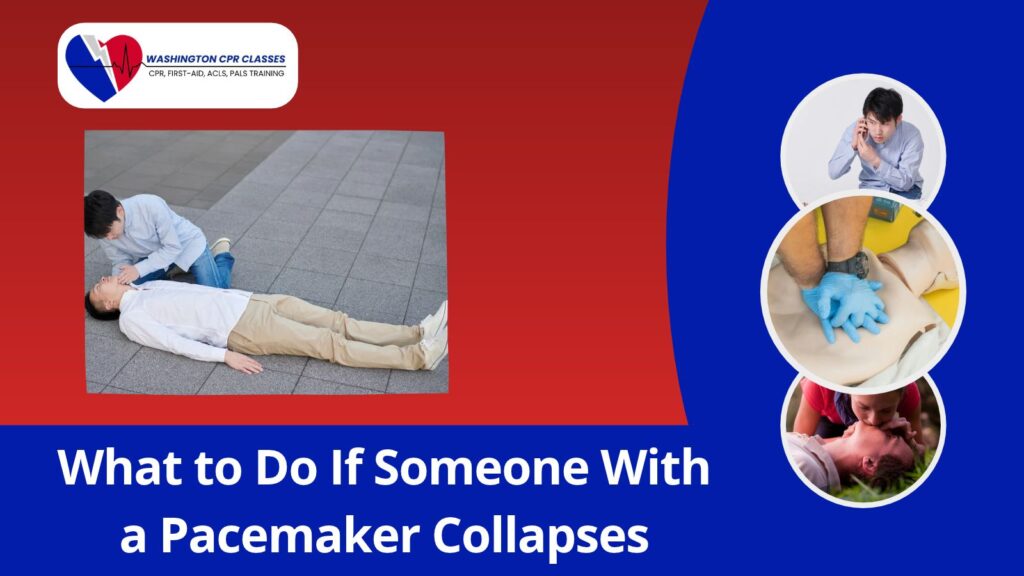
If someone with a pacemaker collapses, check whether they respond and are breathing normally, call emergency services, and begin CPR if they are unresponsive and not breathing normally. Ask someone to bring an automated external defibrillator (AED) and use it as soon as possible. A pacemaker is not a reason to withhold CPR or AED treatment. If using an AED, avoid placing its pads directly over the implanted device.
A pacemaker is an implanted device that helps regulate the heart’s rhythm. Although it helps manage certain heart rhythm problems, it does not prevent every cause of fainting, sudden collapse, or cardiac arrest. Recognizing an emergency and providing immediate first aid can help maintain blood flow to vital organs until emergency medical services arrive.
This guide explains what to do when someone with a pacemaker collapses, how to recognize cardiac arrest, how to perform CPR safely, and when to use an AED.
What to Do Immediately If Someone With a Pacemaker Collapses
When a person with a pacemaker collapses, focus on responsiveness, breathing, and getting emergency help rather than trying to determine whether the device is working.
Follow these immediate steps after someone with a pacemaker collapses:
- Check the scene for safety. Make sure there are no hazards that could put you or the collapsed person at risk.
- Check responsiveness. Tap the person’s shoulders and shout, “Are you okay?” If they do not respond, treat the situation as a potential medical emergency.
- Check breathing. Look for normal breathing. Occasional gasps, snorting, or irregular gasping are not normal breathing and can indicate cardiac arrest. Do not spend more than 10 seconds assessing breathing.
- Call emergency services. Ask someone to call the local emergency number and bring an AED. If you are alone, use your phone’s speaker function when possible and follow the emergency dispatcher’s instructions.
- Start CPR if indicated. If the person is unresponsive and is not breathing normally or is only gasping, begin CPR immediately. Do not delay compressions because the person has a pacemaker.
- Use an AED as soon as possible. Turn it on, attach the electrode pads to the person’s bare chest, and follow its voice prompts. Avoid placing a pad directly over the implanted pacemaker.
- Continue emergency care. Follow the AED’s instructions and continue CPR until the person shows signs of life, emergency professionals take over, the scene becomes unsafe, or you are physically unable to continue.
If the person is responsive and breathing normally, help them remain in a safe position, monitor their condition, and arrange prompt medical evaluation. Sudden collapse, even when followed by apparent recovery, can indicate a serious heart rhythm problem or another medical condition.
How Do You Know If a Person With a Pacemaker Is Having Cardiac Arrest?
Cardiac arrest occurs when the heart suddenly stops pumping blood effectively. A pacemaker can help control certain abnormal heart rhythms, but it does not eliminate the risk of cardiac arrest.
The most important signs of possible cardiac arrest are:
- Sudden unresponsiveness: The person does not respond when you speak loudly or tap their shoulders.
- Absent or abnormal breathing: The person is not breathing normally or is only gasping.
- Sudden collapse: The person falls unconscious without an obvious explanation.
- No purposeful response: The person does not move or respond normally to attempts to wake them.
It is also important to distinguish fainting from cardiac arrest. A person who faints often regains consciousness and continues breathing normally. Someone experiencing cardiac arrest remains unresponsive and does not breathe normally. Because these conditions can initially look similar, check responsiveness and breathing immediately rather than assuming the pacemaker will prevent a serious emergency.
Is It Safe to Perform CPR or Apply an AED on Someone With a Pacemaker?
Yes, CPR and AED use are appropriate when a person with a pacemaker experiences cardiac arrest. If the person is unresponsive and is not breathing normally or is only gasping, call emergency services, begin CPR on the person with a pacemaker, and use an AED as soon as one is available. Never delay lifesaving treatment because the person has an implanted heart device.
Chest compressions can cause rib fractures, but the risk of delaying CPR during cardiac arrest is far greater. Place your hands on the lower half of the breastbone, following standard adult CPR technique, rather than directly over the implanted pacemaker.
Similarly, an AED can be used on someone with a pacemaker. Expose the chest, attach the electrode pads according to the AED diagrams, and avoid placing a pad directly over the implanted device. Follow the AED’s voice prompts and ensure everyone stands clear during rhythm analysis and shock delivery. Resume CPR immediately when instructed.
What Should You Do if Someone With a Pacemaker Faints but Is Still Breathing?
If someone with a pacemaker faints but continues breathing normally, help them remain safe, assess their responsiveness, and monitor their condition. Fainting can occur because of a temporary drop in blood pressure or reduced blood flow to the brain, but it can also indicate an abnormal heart rhythm or another serious medical problem.
Follow these steps:
- Help the person lie down safely. If they are conscious and have no suspected injury, help them lie flat. Avoid allowing them to stand or walk immediately after fainting.
- Check responsiveness and breathing. Confirm that they respond normally and continue breathing without difficulty.
- Call emergency services when necessary. Seek immediate assistance if the fainting occurs during physical activity, is accompanied by chest pain or difficulty breathing, follows a sudden collapse without warning, or involves persistent confusion, injury, or repeated episodes.
- Monitor their condition. Stay with the person and watch for changes in consciousness or breathing.
- Be prepared to start CPR. If they become unresponsive and stop breathing normally or only gasp, call emergency services, begin CPR, and use an AED as soon as possible.
Do not give the person food, drinks, or oral medication while they are unconscious or not fully alert. If they are unconscious but breathing normally, maintain their airway, follow emergency dispatcher instructions, and use the recovery position when appropriate, provided there is no reason to suspect a spinal injury.
Why Can Someone With a Pacemaker Still Collapse?
A pacemaker helps regulate the heart’s electrical activity, but it does not prevent every condition that can cause fainting, loss of consciousness, or cardiac arrest. Understanding the possible causes helps explain why a person with an implanted device still needs immediate assessment after collapsing.
1. Dangerous Heart Rhythm Problems
Some abnormal heart rhythms originate in the heart’s lower chambers and can prevent the heart from pumping blood effectively. A standard pacemaker is designed primarily to help manage certain slow heart rhythms, not to treat every potentially fatal rhythm.
Ventricular fibrillation, for example, can cause cardiac arrest and requires immediate CPR and defibrillation when indicated.
2. Pacemaker Malfunction
A pacemaker can occasionally develop problems involving its battery, leads, sensing, or electrical stimulation. These issues can interfere with its ability to regulate the heart rhythm and cause symptoms such as dizziness, fainting, or weakness.
A suspected device problem requires medical evaluation. Do not delay CPR if the person is unresponsive and not breathing normally.
3. Low Blood Pressure
A sudden drop in blood pressure can reduce blood flow to the brain and cause fainting. Dehydration, certain medications, and changes in body position can contribute to low blood pressure even when a pacemaker is functioning properly.
4. Heart Attack or Other Cardiovascular Problems
A pacemaker does not prevent a heart attack. A heart attack can damage the heart muscle and trigger dangerous electrical disturbances, potentially leading to cardiac arrest.
Chest discomfort, shortness of breath, sweating, nausea, or sudden collapse can indicate a serious cardiovascular emergency.
5. Medication Effects
Some medications can lower blood pressure or affect heart rate and rhythm. These effects can contribute to dizziness, weakness, or fainting in a person with a pacemaker.
A clinician should review recurring symptoms and medications rather than assuming the pacemaker will prevent medication-related complications.
6. Noncardiac Medical Conditions
Low blood sugar, seizures, severe bleeding, pulmonary embolism, and other medical emergencies can also cause collapse or loss of consciousness. A pacemaker does not protect against these conditions.
What Should You Avoid When Someone With a Pacemaker Collapses?
Knowing what not to do is just as important as knowing how to respond. Certain mistakes can delay lifesaving care or increase the risk of injury.
Avoid these common errors:
- Do not delay CPR. If the person is unresponsive and not breathing normally or is only gasping, start CPR immediately.
- Do not assume the pacemaker is working properly. An implanted device does not guarantee that the heart is pumping effectively.
- Do not avoid AED use. An AED can be used on a person with a pacemaker during suspected cardiac arrest. Position the pads so they do not sit directly over the implanted device.
- Do not place CPR hands over the pacemaker. Use the standard adult CPR hand position on the lower half of the breastbone.
- Do not spend time searching for a pulse if you are a lay rescuer. Check responsiveness and breathing, call emergency services, and follow CPR guidance.
- Do not move the person unnecessarily. If a fall or other trauma is suspected, avoid unnecessary movement unless it is required for safety or effective CPR.
- Do not give food, water, or medication to an unconscious person. This can cause choking or aspiration.
- Do not leave the person alone. Stay with them, monitor their condition, and prepare to provide CPR or use an AED if needed.
- Do not assume recovery means the danger has passed. Arrange appropriate medical assessment after unexplained fainting or collapse, especially when warning signs are present.
Learn CPR and AED Skills for Cardiac Emergencies
Knowing how to recognize cardiac arrest, perform high-quality CPR, and operate an AED can help you respond confidently when someone collapses. These skills are especially important because a person with a pacemaker can still experience a life-threatening heart rhythm problem or another medical emergency. CPR and AED training teaches you how to assess responsiveness and breathing, perform effective chest compressions, minimize interruptions, and follow an AED’s voice prompts. Basic Life Support (BLS) certification provides structured training in these skills for healthcare professionals and others whose roles require emergency response knowledge.
With CPR Washington, you can explore American Heart Association (AHA) BLS certification classes that include CPR and AED training. The blended-learning format allows you to complete the online portion before attending a short, in-person skills session near your area. It offers a convenient option for busy professionals who need CPR training and an AHA certification accepted nationwide. If you are a healthcare provider and need ACLS and PALS training, then you can join us.
Build the skills needed to respond to cardiac emergencies. Explore CPR Washington’s BLS certification classes and prepare to act when every second counts.