
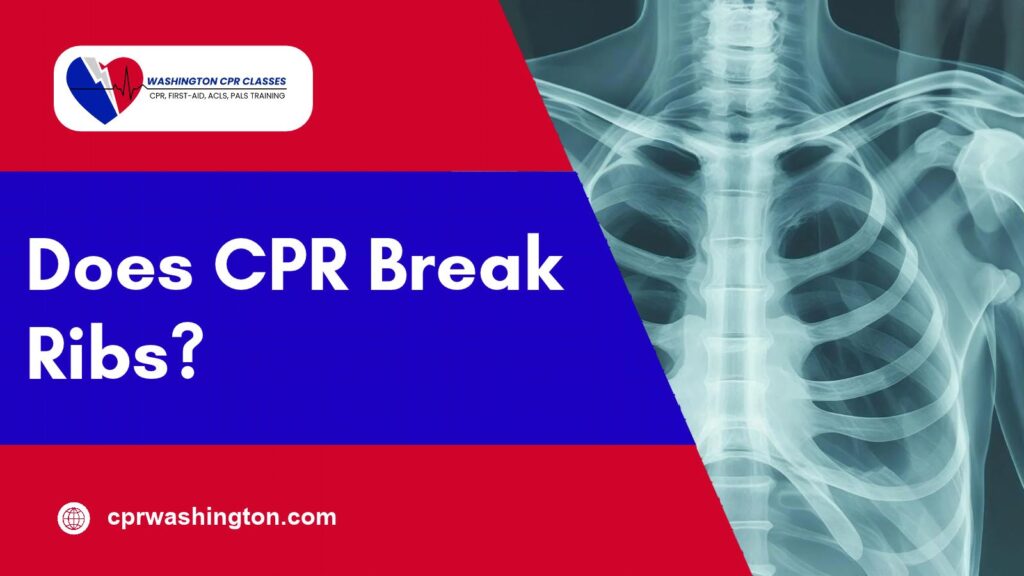
Yes, CPR can break ribs. Chest compressions require firm, repeated pressure on the chest to circulate blood during cardiac arrest, and rib or sternum fractures are recognized complications of CPR. However, the possibility of a broken rib should not prevent you from starting CPR when someone is unresponsive and not breathing normally. The immediate priority is to restore circulation and provide effective resuscitation.
CPR-related chest injuries can range from bruising and rib fractures to sternum fractures and, less commonly, injuries involving internal organs. The likelihood of injury depends on factors such as the person’s age, bone strength, anatomy, and the circumstances in which CPR is performed.
In this blog, you will learn why CPR can break ribs, which ribs are most commonly affected, how common CPR-related fractures are, who faces a higher risk, and what you should do if you hear a rib crack during CPR.
Which Ribs Break During CPR?
The 3rd through 6th ribs are among the ribs most commonly fractured during CPR, with fractures typically occurring in the anterolateral portion of the chest and often affecting both sides. A 2025 study of CPR-related chest wall injuries found that most rib fractures occurred between the 3rd and 6th ribs, while more than 80% occurred between the 3rd and 7th ribs. Most fractures occurred in the rib shaft and were concentrated in the anterolateral region, where chest compressions can create substantial mechanical stress as the ribs bend under pressure.
CPR can fracture multiple ribs rather than a single predictable rib. The study found an average of approximately 10.6 rib fractures per patient among the 40 patients evaluated, although this should not be considered the expected number of fractures for every person who receives CPR because the study population specifically consisted of patients with CPR-related chest wall fractures treated at a trauma center. Sternum fractures can also occur; 30% of patients in the study had a sternal fracture.
Do Broken Ribs Affect Internal Organs?
Broken ribs from CPR can sometimes injure nearby internal organs, but a rib fracture does not automatically mean that an internal organ has been damaged. The ribs protect structures inside the chest, including the lungs, heart, and major blood vessels. When a rib breaks, the fracture itself can cause local chest-wall injury, while a displaced or sharp bone fragment can potentially damage nearby structures.
The risk of internal injury depends on the location and severity of the fracture and the person’s overall condition. Possible complications include pneumothorax, hemothorax, pulmonary contusion, and injury to blood vessels. These complications are uncommon compared with the immediate threat of cardiac arrest, which is why the possibility of rib fractures or other chest injuries should not delay or prevent CPR when it is indicated.
Why Can CPR Break Ribs?
CPR can break ribs because effective chest compressions require substantial force and repeated downward movement of the chest.
During CPR, the rescuer:
- Positions the hands on the center of the chest over the lower half of the sternum.
- Compresses the chest forcefully and repeatedly.
- Allows the chest to return to its normal position between compressions.
- Continues compressions with minimal interruptions.
This mechanical stress can cause the ribs or sternum to fracture, particularly when the chest is less flexible.
How Common Is It to Break Ribs?
Rib fractures are one of the most common injuries associated with CPR, but the reported frequency varies between studies. A 2024 systematic review and meta-analysis that analyzed 74 studies involving 16,629 patients found that rib fractures occurred in approximately 55% of patients who received CPR (95% CI, 48%–62%). The review also found that CPR-related injuries overall occurred in approximately 60% of patients.
The reported rate can vary depending on how fractures are identified. A 2015 CT-based study involving 223 patients found rib fractures in 70% of patients, while an earlier systematic review reported rib-fracture rates ranging from 13% to 97% across studies of adult conventional CPR. Differences in imaging methods, patient populations, CPR duration, and study design can contribute to these variations. Therefore, 55% is a pooled estimate from available research, not a guarantee that a person receiving CPR will fracture a rib.
Who Is at the Highest Risk of Breaking Ribs?
The risk of CPR-related rib fractures is generally influenced by the person’s physical characteristics and the circumstances of resuscitation.
People who can be more susceptible to rib fractures include:
- Older adults, because bone strength and chest-wall flexibility can decrease with age.
- People with low bone density, whose bones can fracture more easily.
- People with fragile or weakened bones, depending on the underlying cause.
- People with certain chest or skeletal conditions that affect bone structure.
- People requiring prolonged or forceful resuscitation, although injury risk varies between individuals.
This does not mean CPR should be performed less effectively on someone who appears vulnerable to injury. Appropriate compression technique remains essential.
Should You Stop CPR If You Hear a Rib Crack?
No. If the person remains in cardiac arrest, you should continue CPR.
Hearing or feeling a crack during chest compressions can be alarming, but stopping CPR because you suspect a broken rib can interrupt circulation at a critical time.
Continue performing high-quality chest compressions and follow the appropriate emergency response steps. If an AED is available, use it as soon as possible and follow its prompts. The presence or suspicion of a rib fracture does not mean the person no longer needs CPR.
Does Breaking a Rib Mean CPR Was Done Wrong?
No. Breaking a rib during CPR does not necessarily mean the rescuer performed CPR incorrectly. Effective chest compressions require firm, repeated pressure on the chest to generate blood flow during cardiac arrest. This force can place substantial stress on the ribs and sternum, making fractures a recognized complication even when CPR is performed using appropriate technique.
However, proper technique still matters. Incorrect hand placement, inappropriate compression depth, excessive interruptions, or failure to allow full chest recoil can reduce the effectiveness of CPR. The goal is not to perform CPR without causing any possible injury, but to provide effective chest compressions while following recommended CPR technique. A suspected rib fracture should therefore not cause a rescuer to stop or deliberately reduce the effectiveness of CPR.
Proper technique to perform chest compressions
Performing chest compressions correctly is essential for effective CPR. For an adult in cardiac arrest, chest compressions help move blood through the heart and to vital organs until an AED can be used and advanced medical care is available.
Follow these basic steps for adult chest compressions:
- Place the person on a firm, flat surface. If possible, position the person on their back on the floor or another firm surface.
- Position your hands correctly. Place the heel of one hand in the center of the chest, on the lower half of the sternum. Place your other hand on top and interlock your fingers.
- Position your body over your hands. Keep your shoulders directly above your hands and your elbows straight. Use your upper body weight to help deliver consistent compressions.
- Compress at the correct rate. Perform chest compressions at 100–120 compressions per minute.
- Use the recommended depth. For an adult, compress the chest approximately 2 inches (5 cm) deep while avoiding excessive depth.
- Allow complete chest recoil. After each compression, let the chest return fully to its normal position. Avoid leaning on the chest between compressions.
- Minimize interruptions. Keep pauses in chest compressions as short as possible, particularly when providing breaths or using an AED.
- Use an AED as soon as possible. Turn on the AED, follow its voice or visual instructions, and resume CPR promptly when instructed.
How long do broken ribs take to heal after CPR?
Broken ribs after CPR usually take about 4 to 6 weeks to heal, although recovery time varies depending on the number and severity of fractures, age, bone health, and overall medical condition. The NHS notes that broken ribs generally heal within 2 to 6 weeks, while Mayo Clinic states that most broken ribs heal in about six weeks.
Pain and tenderness can continue after the bone has healed, particularly with deep breathing, coughing, or certain movements. Good pain control is important because avoiding deep breaths due to pain can increase the risk of chest complications such as pneumonia. More serious or multiple fractures can require a longer recovery period and medical follow-up.
Get CPR trained to feel confident during an emergency
Rib fractures are a recognized complication of CPR, but concern about breaking ribs should never prevent you from providing lifesaving chest compressions during cardiac arrest. Knowing the correct hand placement, compression rate, depth, chest recoil, and AED use helps you respond effectively when an emergency occurs. Get CPR-trained to build the practical skills and confidence needed to act quickly, perform high-quality CPR, and provide immediate assistance when every second matters.
If you want to learn CPR in Washington along with other essential emergency response skills, join our BLS course. You can complete the online portion at your convenience and then attend a short, hands-on in-person session to practice your skills and receive American Heart Association certification. We also provide ACLS and PALS certification courses for healthcare professionals who need advanced life support training. Choose the course that matches your role and training needs to build the skills and confidence needed to respond effectively during a medical emergency.