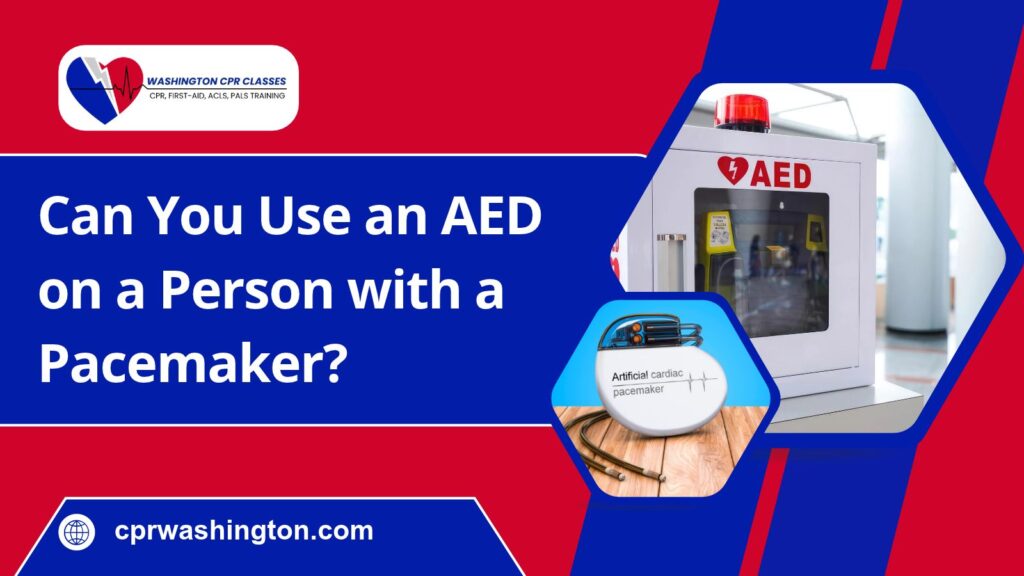
Yes, you can use an Automated External Defibrillator (AED) on a person with a pacemaker during sudden cardiac arrest. A pacemaker is not a reason to withhold CPR or defibrillation. The main precaution is to avoid placing AED pads directly over the implanted device. Follow the AED’s voice prompts and adjust pad placement if necessary, but never delay emergency treatment because the person has a pacemaker
A pacemaker helps regulate the heartbeat by sending electrical impulses to the heart. However, it does not prevent every dangerous heart rhythm or eliminate the risk of cardiac arrest. An AED analyzes the heart’s rhythm and determines whether an external shock is needed. Although an AED shock may potentially affect the pacemaker or its leads, this risk is small compared with the immediate danger of untreated cardiac arrest. Therefore, CPR and defibrillation should never be delayed because a person has an implanted pacemaker.
Understanding how to use an AED on someone with a pacemaker helps rescuers respond confidently and avoid unnecessary delays during a life-threatening emergency. In this guide, you will learn why AED use is important for someone with a pacemaker, where to place AED pads, how to perform CPR safely, and which precautions to follow during an emergency.
Why Do People Hesitate to Use an AED on Someone with a Pacemaker?
People hesitate to use an AED on someone with a pacemaker because they worry that the electrical shock could damage the implanted device or interfere with its function. Others assume that a pacemaker already controls the person’s heartbeat, making an external defibrillator unnecessary.
These concerns are understandable, but they should not prevent emergency treatment.
Common reasons for hesitation include:
- Fear of damaging the pacemaker: Rescuers may worry that an AED shock will permanently damage the implanted device.
- Confusion about how pacemakers work: A pacemaker helps regulate the heart rate, but it does not treat every life-threatening heart rhythm.
- Uncertainty about AED pad placement: People may not know where to position the pads when a pacemaker is visible beneath the skin.
- Fear of making the situation worse: Bystanders may worry about causing additional harm if they use an AED incorrectly.
- Limited CPR and AED training: Without practical training, rescuers may be unsure how to respond to cardiac arrest involving an implanted medical device.
The important point is that an AED is designed to guide the rescuer through rhythm analysis and defibrillation. Follow its instructions, avoid placing pads directly over the implanted device, and prioritize immediate emergency care.
Why You Should Never Delay AED Use During Cardiac Arrest
You should never delay AED use during cardiac arrest because early defibrillation can significantly improve the chance of survival when the heart has a shockable rhythm. Every minute spent waiting to use an AED can reduce the likelihood of a successful outcome. A pacemaker does not prevent all life-threatening heart rhythms, and a person with a pacemaker may still experience sudden cardiac arrest. Although an AED shock may affect the implanted device, the risk of delaying lifesaving treatment is far more serious.
If someone with a pacemaker becomes unresponsive and is not breathing normally, call emergency services, start CPR, and use an AED as soon as possible. Avoid placing the AED pads directly over the pacemaker, follow the device’s voice prompts, and deliver a shock if advised. Never let concerns about pacemaker damage prevent or delay lifesaving CPR and defibrillation.
Can an AED Damage a Pacemaker?
An AED shock may interfere with a pacemaker’s electronic components or temporarily affect its operation. However, damage is not inevitable, and the implanted device may continue to function normally after defibrillation.
If a pacemaker malfunctions after an AED shock, the person may need medical evaluation and device testing to confirm that it is working correctly. Medical professionals can assess the pacemaker and determine whether reprogramming or other intervention is necessary.
The possibility of device damage should not prevent the use of an AED during a life-threatening emergency. The immediate priority is restoring an effective heart rhythm and maintaining the person’s survival.
Can You Perform CPR on Someone with a Pacemaker?
Yes, you can perform CPR on someone with a pacemaker. If a person with a pacemaker collapses and is unresponsive and not breathing normally or is only gasping, activate emergency services, begin CPR, and use an AED as soon as one is available. Follow the appropriate links in the chain of survival to support early recognition, prompt resuscitation, and timely defibrillation. A pacemaker does not prevent chest compressions or eliminate the need for CPR during cardiac arrest. Learn more about how to perform CPR on someone with a pacemaker and the precautions to follow during an emergency.
Place your hands in the center of the chest, on the lower half of the breastbone, and perform chest compressions at a rate of 100–120 per minute for an adult. Do not place your hands directly over the pacemaker, which is usually located beneath the skin near the collarbone. Ask someone to call emergency services and bring an AED, then follow its prompts when it arrives.
How to Use an AED on Someone with a Pacemaker
You can use an Automated External Defibrillator (AED) on someone with a pacemaker by following the standard AED procedure while avoiding direct pad placement over the implanted device. If the person is unresponsive and not breathing normally or is only gasping, call emergency services, start CPR, and use the AED as soon as it is available.
Follow these steps to use an AED safely:
- Turn on the AED: Follow the device’s voice prompts and instructions.
- Expose the chest: Remove clothing to uncover the chest and dry the skin if necessary.
- Locate the pacemaker: Look for a small lump beneath the skin, usually near the collarbone.
- Attach the AED pads: Place one pad on the upper right chest below the collarbone and the other on the left side of the chest below the armpit. Ensure neither pad sits directly over the pacemaker.
- Allow the AED to analyze the rhythm: Make sure no one touches the person while the device analyzes the heart rhythm.
- Deliver a shock if advised: Ensure everyone is clear before pressing the shock button, if the AED instructs you to do so.
- Resume CPR: Immediately restart chest compressions after the shock or a no-shock decision, following the AED’s prompts.
Where to Place AED Pads on Someone With a Pacemaker
When using an automated external defibrillator (AED) on someone with a pacemaker, place the pads according to the AED’s diagrams, making sure neither pad sits directly over the implanted device. A pacemaker is usually located beneath the skin in the upper chest, near the collarbone, and may appear as a small raised area.
For standard adult AED pad placement:
- First pad: Place it on the upper right side of the bare chest, just below the collarbone.
- Second pad: Place it on the left side of the chest, below the armpit.
If a pacemaker is located where a pad would normally go, adjust the pad position so it is not directly over the device while maintaining proper pad contact and placement. Follow the AED’s diagrams and voice prompts.
Can You Use an AED on Someone with an ICD?
Yes, you can use an Automated External Defibrillator (AED) on someone with an Implantable Cardioverter-Defibrillator (ICD). An ICD monitors the heart rhythm and can deliver an internal shock to treat certain dangerous arrhythmias. However, it may not successfully correct every cardiac arrest, so an external AED may still be necessary.
An ICD is often implanted beneath the skin near the collarbone and may resemble a pacemaker. When using an AED, avoid placing a pad directly over the ICD. Follow the AED’s pad-placement diagrams and voice prompts.
Common Mistakes to Avoid When Using an AED on Someone with a Pacemaker
When using an Automated External Defibrillator (AED) on someone with a pacemaker, a few common mistakes can interfere with proper treatment or cause unnecessary delays.
Below are some of the common mistakes that you should avoid when using an AED on someone with a pacemaker:
- Placing an AED pad directly over the pacemaker: The implanted device is usually located beneath the skin near the collarbone. Position the pad away from the device while following the AED’s placement diagrams.
- Delaying treatment out of fear of device damage: Concern about harming the pacemaker should not prevent or delay CPR and AED use during cardiac arrest.
- Assuming a pacemaker prevents cardiac arrest: A pacemaker does not prevent cardiac arrest, as a person with this device can still develop dangerous heart rhythms or other conditions that cause cardiac arrest. Never assume that a pacemaker eliminates the need for emergency treatment, CPR, or AED use.
- Waiting for the pacemaker to work: Do not wait to see whether the implanted device corrects the rhythm. Follow standard cardiac arrest response procedures and use an AED promptly.
- Ignoring the AED’s voice prompts: Follow the device’s instructions for pad placement, rhythm analysis, delivering a shock, and resuming CPR.
- Touching the person during rhythm analysis or shock delivery: Ensure everyone stands clear when instructed by the AED. Resume CPR as directed after analysis or a shock.
Learn CPR and AED Skills for Emergency Situations.
Using an AED on someone with a pacemaker is safe when you follow the device’s instructions and avoid placing pads directly over the implant. Never delay CPR or defibrillation because of concerns about pacemaker damage, as prompt treatment can save lives during cardiac arrest. Learning CPR and AED skills helps you recognize emergencies, respond confidently, and provide lifesaving care when every second counts.
To prepare for emergencies, enroll in CPR Washington’s AHA BLS certification classes, which cover CPR, AED use, and other essential emergency response skills. If you are a healthcare provider and want advanced training, then you can join our PALS and ACLS certification training. Complete the online portion at your own pace and attend a short, in-person skills session near your area to earn your American Heart Association certification, accepted nationwide. Designed for busy professionals, our flexible training helps you get certified quickly and build confidence in emergency situations. Join thousands of professionals who have trained with us and take the next step toward lifesaving skills today.