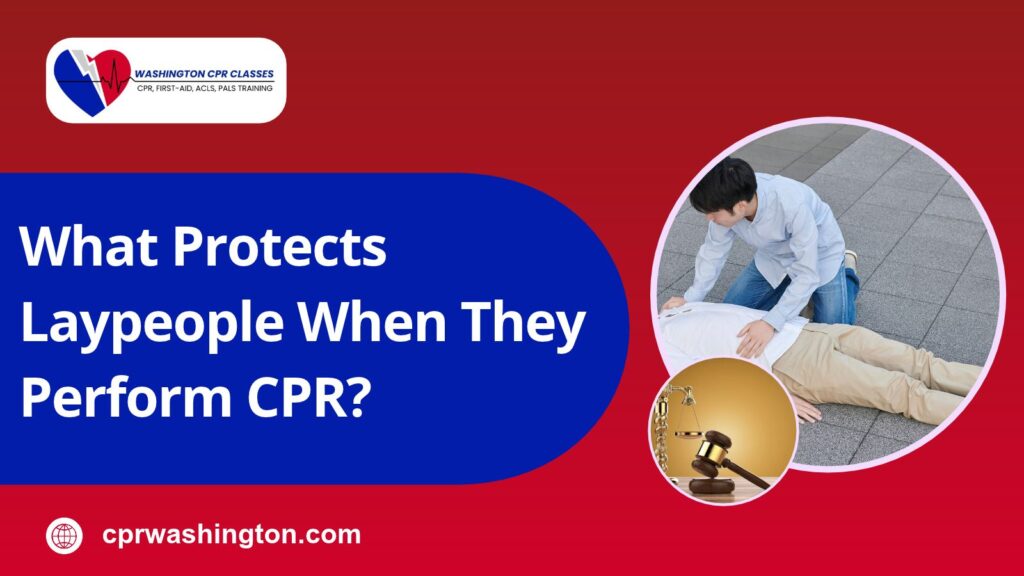
Good Samaritan laws generally protect Laypeople who perform Cardiopulmonary Resuscitation (CPR) during a medical emergency. These laws are designed to protect people who voluntarily provide emergency assistance in good faith from certain civil liability claims, such as ordinary negligence. They encourage bystanders to help someone experiencing cardiac arrest without being afraid of facing legal consequences for trying to save a life.
In the United States, Good Samaritan laws exist in all 50 states, but their specific requirements and protections vary by state. Depending on local legislation, protection may depend on whether the rescuer acts voluntarily, provides assistance without expecting compensation, obtains consent when possible, and avoids gross negligence or intentional misconduct.
This guide explains the legal protections available to lay rescuers, how Good Samaritan laws apply to CPR, when legal protection may not apply, and how bystanders can safely provide emergency assistance.
What Are Good Samaritan Laws?
Good Samaritan laws are legal provisions designed to encourage people to provide voluntary assistance to someone experiencing a medical emergency. They generally limit civil liability for individuals who provide emergency care in good faith without expecting financial compensation. The name comes from the biblical story of the Good Samaritan, which describes a person helping an injured stranger when others refused to assist.
In the United States, all 50 states and the District of Columbia have Good Samaritan laws. However, the laws differ in terms of who qualifies for protection, what types of emergencies are covered, and what actions are considered reasonable emergency assistance. For lay rescuers, these laws commonly provide protection against claims involving ordinary negligence. They do not necessarily protect someone who acts recklessly, intentionally causes harm, or demonstrates gross negligence.
For example, a person who attempts CPR but accidentally causes a rib fracture while performing chest compressions is not automatically liable for the injury. Rib injuries are recognized risks of CPR, and the rescuer’s actions are evaluated under applicable legal protections and circumstances.
How Do Good Samaritan Laws Protect People Performing CPR?
Good Samaritan laws protect lay rescuers by limiting their potential civil liability when they provide reasonable emergency assistance in good faith.
Here are the main ways these laws can protect someone performing CPR:
1. Protection From Ordinary Negligence Claims
Ordinary negligence occurs when someone fails to exercise reasonable care under the circumstances. Good Samaritan laws commonly protect voluntary rescuers from civil claims involving ordinary negligence while providing emergency assistance.
For example, a bystander might perform chest compressions incorrectly or accidentally cause an injury while attempting CPR. If the rescuer acted in good faith and met the applicable legal requirements, Good Samaritan protection may apply.
2. Protection for Untrained Bystanders
A person does not necessarily need professional medical qualifications or CPR certification to receive Good Samaritan protection.
In an emergency, an untrained bystander can provide Hands-Only CPR to an adult experiencing suspected cardiac arrest. The American Heart Association recommends that lay rescuers provide chest compressions rather than delay assistance because they lack formal training. Good Samaritan laws can protect trained and untrained rescuers, depending on the applicable state law.
3. Protection When Using an AED
Some states have specific Good Samaritan and AED statutes that protect people who use an automated external defibrillator (AED) during a cardiac emergency.
These protections encourage people to retrieve and use publicly available AEDs rather than hesitate because of potential legal consequences.
When Does Good Samaritan Protection Apply During CPR?
Good Samaritan protection generally applies when a person voluntarily provides emergency assistance in good faith to someone experiencing a medical emergency and meets the requirements of the applicable state law. In the United States, these laws commonly protect eligible lay rescuers from certain civil liability claims arising from ordinary negligence while providing emergency care.
Although specific requirements differ by state, several common circumstances can determine whether a bystander qualifies for legal protection.
1. When Assistance Is Provided in Good Faith
The rescuer must genuinely intend to help someone experiencing a medical emergency rather than deliberately cause harm or engage in misconduct.
For example, if a bystander witnesses someone collapse in a public place and immediately begins CPR to help restore circulation, the person’s actions generally demonstrate good faith.
2. When Emergency Assistance Is Voluntary
Many Good Samaritan laws protect individuals who voluntarily provide emergency assistance rather than people performing duties they are already legally obligated to fulfill.
For example, someone who witnesses a stranger experiencing cardiac arrest at a shopping mall and voluntarily begins chest compressions may qualify for protection under the applicable state law.
However, healthcare professionals and designated emergency responders may be subject to different legal responsibilities depending on their professional duties and circumstances.
3. When the Rescuer Does Not Expect Financial Compensation
Many state Good Samaritan statutes require emergency assistance to be provided without expecting financial compensation.
For example, a bystander who performs CPR on an unconscious stranger without expecting payment generally meets this requirement under laws that include a compensation condition.
However, some states provide exceptions for certain professionals, so compensation does not automatically eliminate protection in every situation.
4. When Assistance Is Provided During a Genuine Emergency
Good Samaritan protection generally applies when assistance is provided during an actual or reasonably perceived medical emergency, rather than during routine medical care.
For example, if someone suddenly collapses, becomes unresponsive, and is not breathing normally, a bystander who begins CPR is responding to an apparent cardiac emergency.
Some state laws also specify where emergency assistance must occur. Certain statutes primarily cover assistance provided outside hospitals, medical facilities, or other professional healthcare settings.
5. When the Rescuer Acts Within the Applicable Legal Requirements
Rescuers must meet the specific conditions established by their state’s Good Samaritan law. These conditions can include providing assistance in good faith, avoiding intentional misconduct, and following applicable requirements concerning training, compensation, and consent.
For example, Pennsylvania’s Good Samaritan statute, 42 Pa. Cons. Stat. § 8332, protects people who provide emergency care in good faith, whether or not they have medical training. However, it excludes intentionally harmful and grossly negligent conduct that results in harm.
Illinois has a more specific CPR provision under 745 ILCS 49/10, which addresses people trained in CPR who provide emergency assistance in good faith and without compensation.
Are You Legally Required to Perform CPR as a Bystander?
No. In most U.S. states, bystanders are not generally legally required to perform CPR when they witness someone experiencing cardiac arrest. However, certain states and circumstances impose specific duties to provide reasonable assistance or seek emergency help.
Although you may not have a general legal obligation to perform CPR, calling 911, alerting emergency services, or asking another person to help can make a critical difference during a cardiac emergency.
Whether someone has a legal duty to assist depends on several factors:
- State laws: Some states have specific statutes requiring individuals to provide reasonable assistance during emergencies.
- Special relationships: Parents, caregivers, and other individuals with specific legal responsibilities may have a duty to protect or assist someone.
- Professional responsibilities: Healthcare professionals and other designated responders may have additional obligations depending on their employment, licensing requirements, and circumstances.
- Creating the emergency: Someone who causes an emergency may have a legal duty to provide reasonable assistance to the injured person.
Can Someone Sue You for Performing CPR?
Yes. A person can technically file a lawsuit against someone for injuries allegedly caused while performing CPR. However, Good Samaritan laws in the United States generally protect people who voluntarily provide emergency assistance in good faith from certain civil liability claims.
A person or their legal representative might file a lawsuit if they believe the rescuer caused additional injuries or failed to follow reasonable emergency procedures.
Some potential reasons include:
1. Rib fractures or chest injuries: Chest compressions can cause broken ribs, bruising, and other chest injuries. A patient might allege that the rescuer used excessive force or performed compressions incorrectly.
2. Improper CPR technique: A person might claim that the rescuer performed chest compressions incorrectly, causing additional harm during the emergency.
3. Failure to obtain consent: Performing CPR on a conscious person who clearly refuses assistance can create potential legal issues.
4. Reckless or intentional conduct: A rescuer who deliberately causes harm or acts with gross negligence might fall outside the protections provided by applicable Good Samaritan laws.
Do Laypeople Need CPR Certification to Be Protected by Good Samaritan Laws?
No. Laypeople generally do not need CPR certification to receive Good Samaritan protection when providing emergency assistance. Good Samaritan laws are intended to encourage people to help during emergencies, including individuals without professional medical training.
The American Heart Association recognizes that trained and untrained lay rescuers can provide chest compressions to adults experiencing presumed cardiac arrest.
An untrained bystander can follow these basic steps:
- Check the scene for immediate safety.
- Check the person for responsiveness.
- Call 911 or ask someone nearby to activate emergency medical services.
- Check whether the person is breathing normally.
- Begin chest compressions if the person is unresponsive and not breathing normally.
- Push hard and fast in the center of the chest at a rate of 100–120 compressions per minute.
- Ask someone to retrieve an AED and follow its voice instructions when it arrives.
If you are untrained or unwilling to provide rescue breaths, Hands-Only CPR is an appropriate option for an adult with suspected cardiac arrest. Although certification is not generally required for legal protection, CPR training helps people understand proper compression techniques, AED operation, and emergency response procedures.
Are Laypeople Protected When They Use an AED?
Yes. Many states have laws that provide additional legal protection for people who use an automated external defibrillator (AED) during a cardiac emergency. AED Good Samaritan protections encourage bystanders to use publicly accessible defibrillators without unnecessary fear of legal consequences.
An AED analyzes the person’s heart rhythm and determines whether an electric shock is recommended. The device provides voice and visual instructions to guide the rescuer through its operation.
What Should Lay Rescuers Do to Stay Safe While Performing CPR?
Although Good Samaritan laws provide legal protection, rescuers should follow reasonable emergency response practices to protect themselves and the person experiencing cardiac arrest.
Consider these important precautions:
- Check scene safety: Make sure there are no immediate hazards, such as traffic, electrical dangers, fire, or unstable surroundings.
- Call 911: Activate emergency medical services as quickly as possible and follow dispatcher instructions.
- Follow CPR guidelines: Perform chest compressions at the recommended rate and depth.
- Use an AED: Retrieve and use an AED as soon as one becomes available, following its instructions.
- Avoid unnecessary procedures: Provide emergency assistance appropriate to your training and the situation.
- Continue until help arrives: Continue CPR until the person shows signs of life, trained responders take over, the scene becomes unsafe, or you are physically unable to continue.
These steps help rescuers provide appropriate emergency assistance while reducing unnecessary risks.
Get CPR Training to Respond With Confidence
Good Samaritan laws are the primary legal protection for laypeople who voluntarily perform CPR during medical emergencies. They generally protect well-intentioned rescuers from certain civil liability claims involving ordinary negligence, provided they meet the applicable legal requirements. Although these laws differ across states, their central purpose is to encourage people to provide lifesaving assistance without unnecessary fear of legal consequences.
Build the Confidence to Respond During a Cardiac Emergency. Learning CPR helps you recognize cardiac arrest, perform high-quality chest compressions, operate an AED, and provide emergency assistance until professional help arrives. Enroll in our CPR or BLS certification course to develop practical lifesaving skills and understand how to respond confidently during emergencies. With proper training and hands-on practice, you can become better prepared to help someone when every second matters.