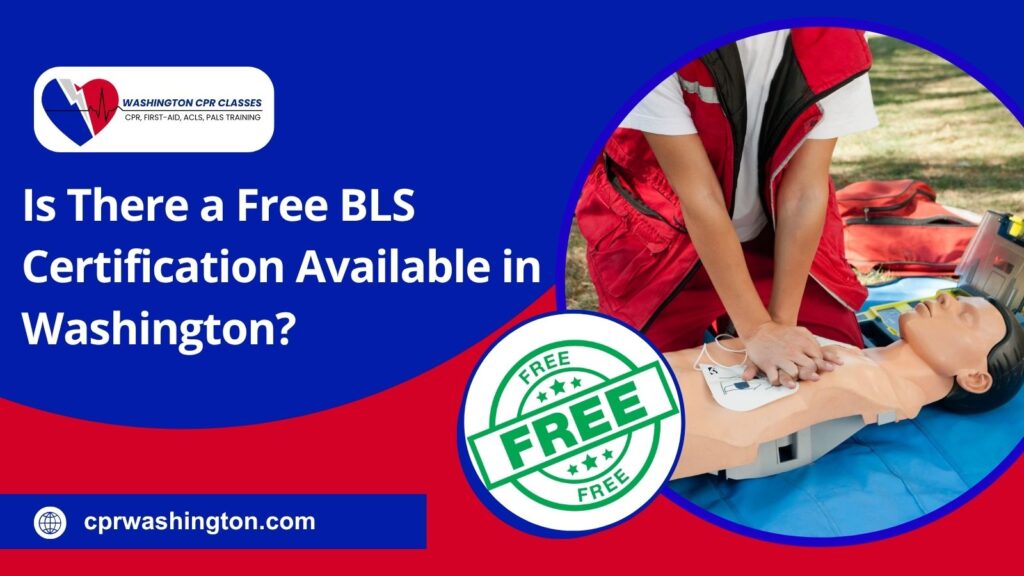
Finding affordable BLS certification in Washington can be important for healthcare professionals, students, and job seekers who need a current credential without adding a large training expense. While many BLS courses charge a fee, there are ways to reduce or eliminate your out-of-pocket cost through employer-sponsored training, school programs, reimbursement, and other funded opportunities.
Basic Life Support (BLS) certification teaches essential skills for responding to cardiac arrest and other life-threatening emergencies, including CPR, AED use, rescue breathing, and choking response. Because BLS certification often requires both knowledge training and hands-on skills assessment, it is important to choose a course that meets the requirements of your employer, school, or professional role.
This guide explains whether free BLS certification is available in Washington, how to find no-cost training opportunities, whether you can complete BLS certification online for free, and what you can expect to pay if you need to take a standard certification course.
What Is BLS Certification Training?
Basic Life Support (BLS) certification training is a healthcare-focused course that teaches participants how to respond to life-threatening emergencies, especially cardiac arrest and breathing emergencies. It is commonly designed for healthcare professionals, healthcare students, first responders, and other workers who may be responsible for providing emergency care. Training typically covers high-quality CPR, automated external defibrillator (AED) use, rescue breathing, choking response, and emergency response for adults, children, and infants.
BLS certification training is more specialized than general CPR training because it focuses on the skills and response techniques expected in professional healthcare settings. Depending on the provider, the course may include online learning, a knowledge assessment, and a hands-on skills evaluation. After successfully completing the required components, participants receive a BLS certification card or digital credential. If you need BLS certification for a job, school, or clinical placement, check the specific requirements to make sure the course and provider are accepted.
Is BLS Certification Free in Washington?
BLS certification is not generally free in Washington, but you may be able to obtain it at no personal cost through an employer, school, workforce program, or sponsored training opportunity. Recognized BLS providers typically charge for certification courses because delivering BLS training involves course materials, CPR manikins, AED training equipment, skills practice, assessment, and certification processing. The cost can vary depending on the provider, location, and course format.
The cost of BLS certification covers more than simply receiving a certificate. It supports the resources and evaluation needed to ensure participants can perform essential lifesaving skills correctly. After completing the required components of an AHA BLS course, participants receive an AHA BLS Provider Course Completion Card that is valid for two years. How Can You Get Free BLS Certification in Washington?
How Can You Get Free BLS Certification in Washington?
Although BLS certification is not typically free in Washington, you may be able to complete the certification without paying out of pocket. The best options are employer-sponsored training, school-provided certification, workforce assistance, and other sponsored programs.
Consider these options if you do not want to pay out of pocket:
1. Check With Your Employer
If BLS certification is required for your job, start by asking your employer whether they provide or pay for BLS training. Hospitals, clinics, nursing facilities, dental offices, and other organizations may offer certification as part of employee training or onboarding. Some employers conduct BLS classes internally, while others pay for employees to attend an approved course. In some cases, you may also be reimbursed after completing the certification.
2. Ask Your School or Training Program
If you are a nursing, medical, EMT, dental, or other healthcare student, check with your school before paying for a BLS course. Educational institutions sometimes arrange BLS certification training for students because certification may be required before clinical rotations or practical training. The school may cover the cost, include it in program fees, or provide access to a discounted course through an approved training provider.
3. Look for Workforce Training Assistance
Some workforce development programs help eligible individuals pay for training and certifications that can improve their employment opportunities. If you are unemployed, changing careers, or participating in a qualifying job-training program, ask whether BLS certification is an eligible training expense. Availability depends on the program, eligibility requirements, and available funding.
4. Search for Sponsored BLS Training
Healthcare organizations, community groups, educational institutions, and other organizations may occasionally sponsor free or subsidized BLS training for specific groups. These opportunities can be limited and may have eligibility requirements. When searching, pay attention to whether the program provides an actual BLS certification or only offers general CPR, AED, or first aid education.
5. Ask About Employer Reimbursement
Even if your employer does not offer free BLS classes, it may have a professional certification reimbursement policy. You may be able to pay for an approved course initially and receive reimbursement after successfully completing it. Before registering, ask whether the provider must be pre-approved and whether you need authorization before taking the course.
6. Check for Student and Group Discounts
If you cannot find a completely free BLS course, discounts can significantly reduce the amount you need to pay. Students may qualify for special pricing, while employers can sometimes receive group rates when several employees complete training together. Comparing the total course price can help you find a more affordable BLS certification without relying on questionable free-certification websites.
Can You Get BLS Certification Completely Online for Free?
No, a recognized healthcare-provider BLS certification generally cannot be completed completely online for free. The American Heart Association (AHA) offers HeartCode BLS, which lets you complete the learning portion online, but you must also complete a hands-on skills session to demonstrate CPR and AED competency. After completing all requirements, you receive an AHA BLS Provider Course Completion Card, valid for two years.
The hands-on requirement is important because BLS certification verifies your ability to perform lifesaving skills, not just understand the theory. In Washington, for example, regulations specifically require both didactic instruction and an in-person skills assessment for certain dental staff providing direct patient care. Therefore, be cautious of websites offering “100% free BLS certification online” and confirm that any course you choose is accepted by your employer, school, or licensing authority
Is BLS Certification Required for Healthcare Workers in Washington?
BLS certification is required for some healthcare workers in Washington, but it is not a universal requirement for every healthcare profession. Whether BLS certification is required depends on the individual’s profession, job responsibilities, employer, healthcare facility, and applicable state regulations. Some positions may have specific state requirements, while others may require BLS certification as an employer or workplace policy.
Healthcare workers who may be required to maintain BLS certification include:
- Dentists and dental professionals: Washington requires certain dental personnel who provide direct patient care to maintain current healthcare-provider BLS certification.
- Nurses and other clinical staff: BLS may be required by an employer, healthcare facility, or clinical setting.
- EMTs and paramedics: BLS training may be required as part of employment, professional training, or organizational requirements.
- Healthcare students: Nursing, medical, dental, and other healthcare programs may require current BLS certification before clinical training.
- Other patient-care professionals: Employers may require BLS certification for employees who could be responsible for responding to cardiac or respiratory emergencies.
Therefore, healthcare workers in Washington should not assume that BLS certification is automatically required or not required, based solely on their profession. Check with your employer, school, licensing authority, or healthcare facility to determine whether current BLS certification is required.
Where Can You Get BLS Certification in Washington?
You can get BLS certification in Washington through American Heart Association (AHA) Training Centers and other authorized training providers offering classroom or blended-learning courses. The AHA provides both instructor-led BLS classes and HeartCode BLS, which combines online coursework with a hands-on skills session. After completing all required components, participants receive a BLS Provider Course Completion Card that is valid for two years.
When choosing a BLS provider in Washington, consider the following:
- AHA Training Centers: The AHA maintains a network of Training Centers and instructors where you can find classroom BLS courses and hands-on skills sessions.
- In-person BLS classes: These courses provide the complete learning experience with an instructor, including cognitive instruction, hands-on practice, and skills testing.
- Blended BLS training: You can complete the educational portion online and then attend a hands-on skills session with an AHA instructor.
- Self-guided BLS training: Some AHA pathways combine self-paced online learning with a skills session using approved equipment that provides real-time feedback.
- Local BLS training providers: Washington has BLS training centers in cities including Seattle, Bellevue, Renton, Everett, and other communities, making it possible to choose a location and course format that fits your schedule.
If you need AHA BLS certification in Washington, verify the provider, course format, and certification requirements before registering. Your employer or school may also specify which BLS certification they accept, so confirming these requirements beforehand can help you avoid taking a course that does not meet your needs.
How Much Does BLS Certification Cost in Washington?
The cost of BLS certification in Washington typically ranges from about $60 to $110, depending on the training provider, course format, location, and whether you are taking an initial certification or renewal course. For example, current Washington listings show blended AHA BLS options cost about $80–$110.
The total price can vary because some courses include the online portion, skills assessment, and certification card in one fee, while others charge separately for course materials or the hands-on session. The American Heart Association (AHA) offers both classroom BLS and HeartCode BLS blended training, with the latter requiring an in-person skills session after completing the online portion
Ready to Get Your BLS Certification in Washington?
While free BLS certification in Washington is not commonly available through standard certification providers, you may be able to avoid paying out of pocket through employer-sponsored training, school programs, workforce assistance, reimbursement, or other sponsored opportunities. If you need BLS certification for a healthcare job, school, or clinical placement, make sure the course is provided by a recognized organization and meets your specific requirements.
Whether you’re getting certified for a new job, renewing your credentials, or advancing your healthcare career, CPR Washington, powered by CPR VAM, offers American Heart Association (AHA) certification courses designed to meet workplace and licensing requirements. With more than 22 years of experience, flexible scheduling, advanced Voice-Assisted Manikin (VAM) technology, and same-day AHA digital certification cards upon successful course completion, you can confidently earn your CPR/AED, BLS, ACLS, or PALS certification.