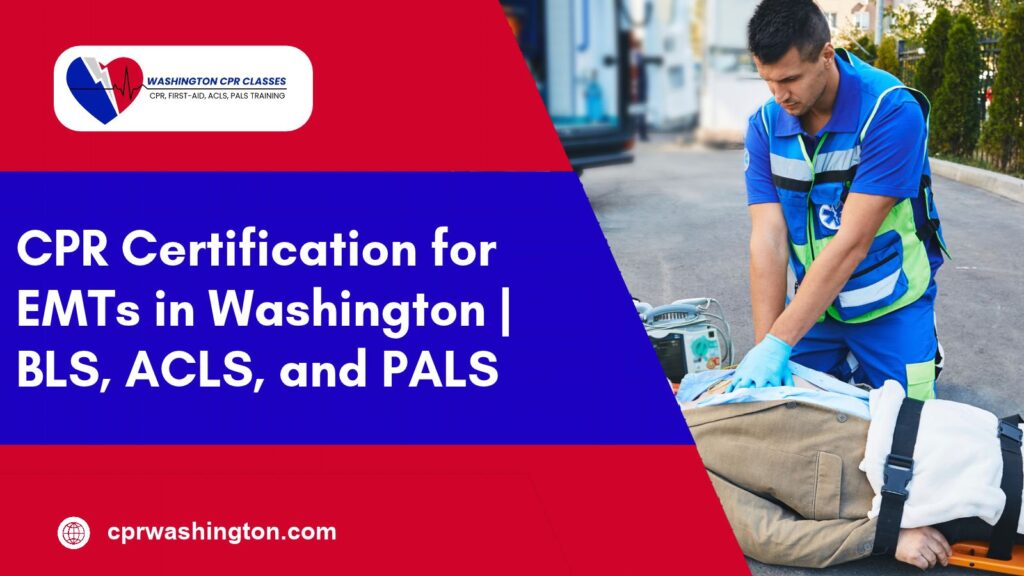
Paramedics in Washington provide advanced emergency medical care to patients with life-threatening medical and traumatic conditions. They respond to cardiac arrest, severe respiratory distress, major trauma, acute cardiovascular emergencies, and other conditions that require treatment before a patient reaches the hospital.
During a cardiac arrest, a paramedic may lead or coordinate the resuscitation effort, interpret cardiac rhythms, perform advanced airway management, provide assisted ventilation, administer medications within their scope and protocols, perform defibrillation, and continuously reassess the patient’s response to treatment. Paramedics also work closely with EMTs, firefighters, emergency physicians, nurses, and other healthcare professionals during complex emergencies.
Paramedics may also respond to critically ill infants and children who require specialized assessment and resuscitation. Maintaining current BLS, ACLS, and applicable pediatric resuscitation skills is an important part of preparing for these high-acuity calls.
If you need American Heart Association BLS, ACLS, or PALS certification, choose training that matches your paramedic responsibilities and includes the required hands-on practice and skills evaluation.
Which CPR Certification Do You Need as an EMT?
EMTs in Washington need healthcare-provider-level CPR/BLS training rather than a basic community CPR course. BLS training covers high-quality CPR, AED use, ventilation, and other essential skills used during emergency response. ACLS or PALS requirements depend on the EMT’s specific role, employer, EMS agency, and applicable training requirements.
Why CPR Certification Matters for EMTs
Paramedics frequently manage the most critical stage of a patient’s emergency care before arrival at a hospital. Their resuscitation training supports rapid assessment, advanced intervention, continuous reassessment, and coordination with the rest of the EMS team.
- Lead Cardiac Arrest Resuscitation: Paramedics may coordinate CPR, defibrillation, airway management, medications, rhythm assessment, and other components of a cardiac arrest response.
- Interpret Cardiac Rhythms: ACLS training helps paramedics identify and respond to life-threatening cardiac rhythms during resuscitation.
- Perform Advanced Airway Management: Paramedics manage compromised airways and provide advanced ventilation support during severe respiratory emergencies and cardiac arrest.
- Provide Advanced Cardiovascular Care: Paramedics assess and treat serious cardiovascular conditions using advanced life-support protocols and equipment.
- Perform Defibrillation and Cardioversion: Paramedics may use advanced cardiac equipment during appropriate cardiac emergencies as part of coordinated resuscitation.
- Administer Emergency Medications: Paramedics may administer medications during emergency treatment according to their scope of practice, medical direction, and applicable protocols.
- Manage Critically Ill Trauma Patients: Paramedics provide advanced assessment and stabilization for patients with severe trauma, hemorrhage, respiratory compromise, and other life-threatening injuries.
- Reassess Patients During Transport: Paramedics continuously monitor patients and adjust emergency treatment based on changes in vital signs, cardiac rhythm, airway status, and clinical condition.
- Coordinate With EMTs and Other Providers: Paramedics often direct or coordinate portions of an EMS response while working with EMTs, firefighters, dispatchers, hospital teams, and medical direction.
- Provide Pediatric Resuscitation: PALS training prepares paramedics to manage pediatric respiratory emergencies, shock, and cardiac arrest.
- Maintain Advanced-Life-Support Credentials: Current BLS, ACLS, and applicable pediatric resuscitation credentials support the training requirements associated with paramedic practice.
Where Can EMTs Use Their CPR and BLS Skills?
EMTs use CPR, BLS, AED, airway, and emergency-response skills in many prehospital environments.
Ambulances and EMS Vehicles
EMTs provide patient assessment, CPR, AED operation, airway support, monitoring, and other emergency care while transporting patients to a medical facility.
Private Homes and Residential Areas
Many 911 calls begin in homes or residential communities. EMTs may respond to cardiac arrest, breathing problems, falls, overdoses, injuries, and other medical emergencies requiring immediate assessment and treatment.
Roadside and Motor Vehicle Accident Scenes
EMTs respond to vehicle crashes and roadside emergencies where patients may have traumatic injuries, severe bleeding, respiratory problems, or cardiac arrest. CPR and BLS skills support immediate life-saving care at the scene.
Workplaces and Industrial Sites
EMTs may respond to offices, construction sites, factories, warehouses, and other workplaces following medical emergencies or injuries. BLS and AED skills are important when a worker experiences sudden cardiac arrest or another serious condition.
Public Events and Community Locations
EMTs provide emergency medical response at sporting events, concerts, festivals, public gatherings, and other community locations. They may need to perform CPR, use an AED, or provide emergency care before transporting a patient.
Emergency Departments and Hospital Transfers
EMTs may transport patients to emergency departments and participate in patient handoffs with hospital staff. They may also provide medical transportation where ongoing monitoring and emergency care are required.
Pediatric Emergency Calls
EMTs can respond to infants and children experiencing breathing problems, shock, injuries, or cardiac arrest. Pediatric resuscitation skills help EMTs provide appropriate emergency care while awaiting or working alongside advanced medical support.
EMS Stations and Training Facilities
EMTs use CPR and BLS skills during continuing education, skills evaluations, emergency drills, and team-based EMS simulations.
On-Site CPR, BLS, ACLS & PALS Training for EMS Teams
EMS agencies often need to keep EMTs, paramedics, and other emergency personnel current on required resuscitation credentials. On-site CPR, BLS, ACLS, and PALS training allows an EMS team to complete training at a convenient workplace or designated training location.
Group training also gives EMS personnel an opportunity to practice emergency-response procedures, communication, and team coordination together. Training should be selected according to each employee’s role because BLS, ACLS, and PALS address different levels of resuscitation care.
If your organization needs on-site group CPR, First Aid, BLS, ACLS, or PALS training, training can be brought directly to your location. Your EMS team can complete American Heart Association-authorized courses in a convenient group setting while minimizing time away from emergency operations.
Why Choose Us for EMT Certification?
Official AHA Certification
Complete American Heart Association BLS, ACLS, PALS, and CPR courses designed for healthcare professionals and applicable workplace requirements.
Hands-On Training With Live Feedback
Practice CPR, AED use, ventilation, and other resuscitation skills using quality training equipment with real-time feedback before completing the skills evaluation.
Training for EMS Professionals
Complete training designed for EMTs and other emergency professionals who need current CPR and resuscitation credentials for their work.
Flexible Scheduling and Short On-Site Time
Choose convenient class times and complete the required hands-on portion efficiently around EMS shifts, field responsibilities, and other professional commitments.
High Pass Rate and Unlimited Retakes
Receive support throughout training and skills evaluation. If you do not pass on your first attempt, unlimited retakes provide additional opportunities to practice and complete the required evaluation.
Individual and Group Training
Training is available for individual EMTs and organizations that need BLS, ACLS, PALS, or CPR certification for EMS teams.
Book Your EMT CPR Course Today!
EMTs in Washington use BLS and CPR skills to respond to cardiac arrest, respiratory emergencies, trauma, and other life-threatening conditions in the field. Choose the course that matches your professional requirements and complete the required hands-on training and skills evaluation.
Ready to complete your CPR training? Choose the appropriate BLS, ACLS, or PALS course and complete your American Heart Association certification with hands-on practice and skills evaluation. Book your CPR, BLS, ACLS, or PALS course in Washington today.