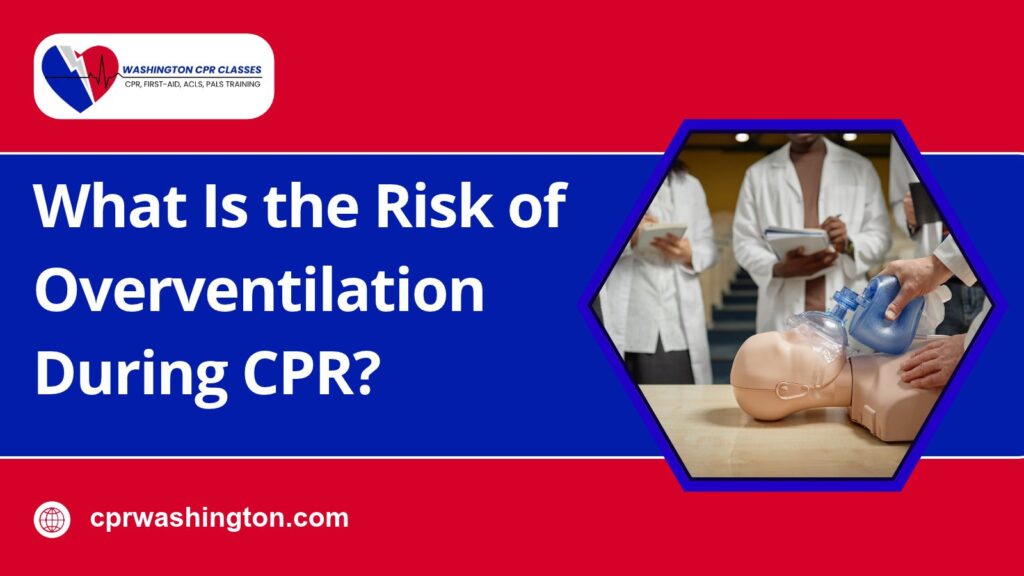
Overventilation during cardiopulmonary resuscitation (CPR) occurs when a rescuer delivers breaths too quickly, too forcefully, or in excessive amounts. It is dangerous because it increases pressure inside the chest, reduces blood return to the heart, and decreases the amount of blood pumped to vital organs during chest compressions.
The main risk of overventilation during CPR is reduced cardiac output and coronary and cerebral perfusion. Excessive ventilation can also cause gastric inflation, increasing the risk of regurgitation and aspiration. Instead of improving oxygen delivery, giving too many breaths can make CPR less effective and reduce the patient’s chances of survival.
This guide explains the risks of overventilation during CPR, why excessive breathing is harmful, the recommended ventilation rate, and how rescuers can avoid this common CPR mistake.
What Is Overventilation During CPR?
Overventilation during CPR refers to providing rescue breaths at a rate, volume, or pressure greater than recommended. It commonly happens when rescuers deliver breaths too frequently, squeeze a bag-valve mask (BVM) too forcefully, or fail to allow enough time for the chest to fall between breaths.
During CPR, chest compressions help circulate blood to the heart and brain. Rescue breaths provide oxygen to the lungs. Both interventions are important, but excessive ventilation can interfere with blood circulation and reduce the effectiveness of chest compressions.
Overventilation can occur during:
- Mouth-to-mouth CPR: Giving rescue breaths too quickly or forcefully.
- Bag-mask ventilation: Squeezing the ventilation bag too rapidly or delivering excessive tidal volume.
- Advanced airway CPR: Ventilating a patient too frequently after placing an endotracheal tube or supraglottic airway.
The goal is to provide enough ventilation to support oxygenation without increasing intrathoracic pressure unnecessarily.
What Are the Risks of Overventilation During CPR?
Overventilation can interfere with the body’s ability to circulate blood during cardiac arrest. The major risks include:
1. Decreased Venous Return to the Heart
One of the most serious risks of overventilation during CPR is reduced venous return. When a rescuer delivers excessive air into the lungs, pressure inside the chest (intrathoracic pressure) increases.
This increased pressure compresses the major veins that carry blood back to the heart. As a result, less blood returns to the heart between chest compressions, reducing the amount of blood available for circulation.
2. Reduced Cardiac Output
Cardiac output refers to the amount of blood the heart pumps through the circulatory system per minute. During CPR, chest compressions generate the blood flow needed to supply oxygen to vital organs.
Overventilation increases intrathoracic pressure and reduces venous return, which can decrease cardiac output. Consequently, the heart and other vital organs receive less blood during resuscitation.
3. Decreased Blood Flow to the Brain and Heart
The brain and heart require continuous blood flow to receive oxygen during cardiac arrest. Excessive ventilation can reduce the effectiveness of chest compressions by interfering with blood circulation.
Reduced blood flow can lower:
- Coronary perfusion: Less blood reaches the heart muscle, making it harder to restore spontaneous circulation.
- Cerebral perfusion: Less blood reaches the brain, increasing the risk of neurological injury.
- Systemic circulation: Other vital organs receive less oxygenated blood during resuscitation.
Maintaining adequate blood flow through high-quality chest compressions is essential for improving the chances of return of spontaneous circulation (ROSC).
4. Gastric Inflation and Aspiration
When rescuers deliver breaths too forcefully or too quickly, some air can enter the stomach instead of the lungs. This condition is called gastric inflation.
Excessive air in the stomach can cause abdominal distension, increasing the risk of:
- Regurgitation of stomach contents.
- Vomiting during resuscitation.
- Aspiration of stomach contents into the lungs.
- Additional airway complications.
Aspiration can interfere with effective ventilation and cause further respiratory complications after resuscitation.
5. Reduced CPR Effectiveness and Survival Chances
Overventilation can undermine the overall effectiveness of CPR. Increased intrathoracic pressure, reduced venous return, and decreased cardiac output can make it harder to maintain adequate circulation.
Research reviewed in the American Heart Association’s CPR guidelines identifies excessive ventilation as a harmful practice associated with decreased cardiac output and survival. Therefore, rescuers should provide controlled breaths while maintaining effective chest compressions.
What Is the Recommended Ventilation Rate During CPR?
The recommended ventilation rate depends on the patient’s age, cardiac arrest situation, and whether an advanced airway is in place.
According to the 2025 American Heart Association (AHA) CPR guidelines, rescuers should avoid both hypoventilation and hyperventilation. For adult cardiac arrest, the recommended approach is:
| CPR situation | Recommended ventilation |
| Adult CPR without an advanced airway | 30 compressions followed by 2 breaths |
| Adult CPR with an advanced airway | 1 breath every 6 seconds (10 breaths per minute) during continuous compressions |
| Adult respiratory arrest with a pulse | 1 breath every 6 seconds (10 breaths per minute) |
Each rescue breath should be delivered over approximately 1 second, using enough air to produce visible chest rise. The 30:2 ratio applies to adult CPR without an advanced airway. Once an advanced airway is established, healthcare professionals can provide continuous chest compressions while delivering 10 breaths per minute.
These recommendations help prevent excessive ventilation while maintaining adequate oxygen delivery. See the 2025 AHA Adult Basic Life Support Guidelines for the complete recommendations.
How Can Rescuers Prevent Overventilation During CPR?
Rescuers can prevent overventilation by following the recommended compression-to-ventilation ratio, controlling breath volume, and allowing enough time between breaths.
Here are practical ways to avoid excessive ventilation:
- Follow the 30:2 compression-to-ventilation ratio: For adult CPR without an advanced airway, perform 30 chest compressions followed by 2 rescue breaths.
- Deliver each breath over 1 second: Avoid giving breaths too quickly or forcefully.
- Watch for visible chest rise: Provide only enough air to make the chest visibly rise. Avoid excessive lung inflation.
- Control bag-valve mask ventilation: When using a BVM, squeeze the bag slowly and gently rather than delivering large amounts of air.
- Follow the correct ventilation rate: With an advanced airway in place during adult cardiac arrest, provide 1 breath every 6 seconds while continuing chest compressions.
- Maintain effective chest compressions: Compress at 100–120 times per minute, allow complete chest recoil, and minimize interruptions.
- Receive proper CPR training: Practice rescue breathing and bag-mask ventilation under instructor supervision to develop appropriate ventilation techniques.
Following these practices helps maintain adequate oxygen delivery without unnecessarily increasing pressure inside the chest.
What Is the Difference Between Adequate Ventilation and Overventilation During CPR?
Adequate ventilation provides enough air to support oxygenation without interfering with blood circulation. Overventilation delivers excessive air, either through too many breaths or excessive breath volume.
| Factor | Adequate ventilation | Overventilation |
| Breath frequency | Follows recommended rate | Too many breaths |
| Breath volume | Enough for visible chest rise | Excessive air volume |
| Delivery pressure | Controlled and gentle | Too forceful |
| Intrathoracic pressure | Avoids unnecessary increases | Increases excessively |
| Venous return | Better preserved | Reduced |
| Gastric inflation | Less likely | Increased risk |
| CPR effectiveness | Supports circulation | Can reduce cardiac output |
The primary goal is not to deliver as much oxygen as possible but to provide effective ventilation while maintaining adequate blood circulation.
Does Overventilation During CPR Cause Cardiac Arrest Complications?
Yes. Overventilation can worsen the patient’s condition during cardiac arrest by reducing venous return, decreasing cardiac output, and compromising blood flow to the heart and brain.
It can also cause gastric inflation, regurgitation, and aspiration. These complications can make resuscitation more difficult and reduce the effectiveness of life-saving interventions.
However, ventilation remains an important part of CPR, particularly in cardiac arrests caused by respiratory problems, drowning, and other conditions involving oxygen deprivation. Rescuers should avoid both excessive and insufficient ventilation.
Improve Your CPR and Ventilation Skills With Proper Training
Avoiding overventilation is an essential part of high-quality CPR. Rescuers must understand the correct compression-to-ventilation ratio, deliver controlled rescue breaths, and maintain effective chest compressions to support blood circulation during cardiac arrest.
If you want to develop these life-saving skills, enroll in a CPR or BLS certification course through CPR Washington. The training covers high-quality CPR, rescue breathing, AED operation, and other essential emergency response techniques. With a convenient blended learning format, you can complete the online coursework at your own pace and attend a short, in-person skills session to demonstrate your abilities. Healthcare professionals and other learners can strengthen their emergency response skills and earn an American Heart Association (AHA) certification accepted nationwide.
Frequently Asked Questions
Why Is Overventilation Harmful During CPR?
Overventilation is harmful because it increases intrathoracic pressure, reduces venous return to the heart, and decreases cardiac output. It can also cause gastric inflation, regurgitation, and aspiration.
What Happens If You Give Too Many Rescue Breaths During CPR?
Giving too many rescue breaths can increase pressure inside the chest, interfere with blood circulation, and reduce the effectiveness of chest compressions. Excessive breaths can also push air into the stomach, increasing the risk of vomiting and aspiration.
How Long Should Each Rescue Breath Last During CPR?
Each rescue breath should last approximately 1 second and produce visible chest rise. Avoid delivering breaths too quickly or forcefully.
How Many Breaths Per Minute Should You Give During CPR?
For adults with an advanced airway during cardiac arrest, healthcare professionals should provide 10 breaths per minute, or 1 breath every 6 seconds, while maintaining continuous chest compressions. Without an advanced airway, use a 30:2 compression-to-ventilation ratio.
Can Overventilation Cause Gastric Inflation?
Yes. Excessive ventilation can force air into the stomach instead of the lungs, causing gastric inflation. This increases the risk of regurgitation and aspiration during CPR.
Is Overventilation More Dangerous Than Hypoventilation During CPR?
Both are harmful. Overventilation can decrease cardiac output and cause aspiration, while hypoventilation can result in inadequate oxygen delivery and carbon dioxide removal. Rescuers should provide adequate ventilation without exceeding recommended rates or volumes.