
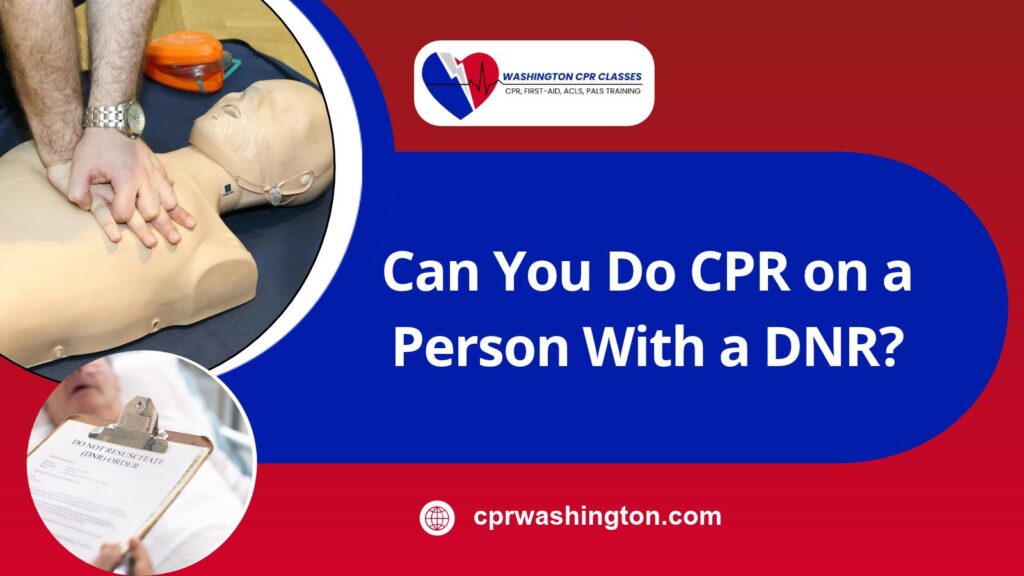
No, you should not perform cardiopulmonary resuscitation (CPR) on someone with a valid, applicable Do Not Resuscitate (DNR) order that directs responders to withhold resuscitation. However, if you cannot confirm whether the order is valid and applies to the emergency, call emergency services immediately and follow the dispatcher’s instructions and applicable protocols. A DNR order does not mean that all medical treatment should stop, and the person should continue to receive appropriate care consistent with their wishes.
A DNR order specifies that CPR should not be performed if a person’s heart stops beating or they stop breathing under the circumstances covered by the order. Its recognition and application may depend on the documentation, the emergency setting, and local laws and protocols. If CPR begins before the order is identified, responders should promptly communicate the information and follow the applicable procedures.
This guide explains when CPR should be withheld, how to verify a DNR order, and what to do if CPR is started by mistake.
What Is a DNR Order?
A Do Not Resuscitate (DNR) order is a medical order that instructs healthcare providers not to perform cardiopulmonary resuscitation (CPR) if a person’s heart stops beating or they stop breathing in circumstances covered by the order. A healthcare provider establishes the order after discussing the person’s wishes with them or, when appropriate, their authorized representative. A DNR order focuses specifically on resuscitation and does not automatically mean that the person refuses all medical treatment. They can still receive appropriate care, including medications, oxygen, pain relief, and comfort measures, depending on their other medical orders and treatment preferences.
The formal use of DNR orders developed during the 1970s as medical professionals established policies for documenting decisions about resuscitation. In 1974, the American Heart Association recommended documenting circumstances in which CPR should not be performed, and hospital policies on DNR orders appeared in medical literature in 1976. Today, a DNR order is typically recorded in a medical record or an approved out-of-hospital form, depending on local requirements. The order helps communicate a person’s resuscitation preferences to healthcare professionals and emergency responders.
When Is a DNR Order Typically Made?
A Do Not Resuscitate (DNR) order is often established during hospitalization for a serious illness or when a person’s health deteriorates, particularly when healthcare providers discuss the expected benefits and burdens of cardiopulmonary resuscitation (CPR). Although some people document their resuscitation preferences well in advance, others make the decision after a significant change in their medical condition or during end-of-life care. The timing varies depending on the person’s wishes, clinical circumstances, and discussions with their healthcare team.
Common situations that prompt a DNR discussion include acute medical deterioration, advanced cancer, severe heart or lung disease, advanced dementia, and decisions to discontinue disease-directed treatment. During these conversations, healthcare providers explain the likely outcomes of CPR and help patients understand how resuscitation aligns with their treatment goals. If a patient cannot make or communicate the decision, an authorized healthcare representative may participate according to the patient’s known wishes and applicable law.
Who Might Have a DNR Order?
People with different health conditions and personal treatment preferences may have a DNR order. It is not limited to people who are elderly, terminally ill, or receiving hospice care.
Someone might have a DNR order if they:
- Have a serious or advanced medical condition.
- Are receiving hospice or palliative care.
- Have discussed resuscitation preferences with their healthcare professional.
- Have chosen to avoid CPR because of their personal goals and understanding of its potential outcomes.
- Have an applicable medical order documented in a healthcare facility or through a recognized out-of-hospital process.
Having a DNR order does not mean that a person is currently dying or that every emergency treatment should be withheld. Their care should follow the documented order and their other treatment preferences.
What Are the Signs That a Person Has a DNR Order?
You cannot reliably determine whether someone has a Do Not Resuscitate (DNR) order based on their age, medical condition, appearance, or whether they receive hospice care. The most reliable indicators are recognized medical documentation or confirmation from an authorized healthcare professional.
Signs or documentation that indicate a DNR order include:
DNR Bracelets and Medical Alert Jewelry
Some people with a DNR order wear a medical identification bracelet, necklace, or another recognized identification item indicating their resuscitation preferences. These items can alert bystanders and emergency responders that a medical order might exist. However, the wording, symbols, and identification items accepted as evidence of a DNR vary by location, so responders should follow the applicable verification protocol.
DNR Wallet Cards
A person might carry a DNR card or an out-of-hospital medical order in a wallet or purse. The document can provide information about the person’s resuscitation preferences and, depending on the form, details about the authorizing healthcare professional. Whether a wallet card is sufficient depends on local requirements and whether the document is recognized and applicable to the emergency.
Posted DNR Documentation at Home
People receiving hospice care or other support at home might keep their DNR paperwork in an accessible location, such as near the bed or with other important medical documents. Caregivers should know where the documentation is kept and how to show it to emergency responders. The appropriate location and accepted paperwork vary by jurisdiction and local emergency service procedures.
POLST Forms (Portable Medical Orders)
A Physician Orders for Life-Sustaining Treatment (POLST) documents medical decisions about life-sustaining treatments, including CPR. If it specifies no resuscitation, responders must verify that the form is valid and applicable under local protocols.
Out-of-Hospital DNR Forms
An out-of-hospital DNR form communicates a person’s decision not to receive CPR during cardiac arrest outside a hospital. It must meet local requirements to be recognized by emergency responders.
Medical Records in Hospitals and Care Facilities
In hospitals, nursing homes, and other healthcare facilities, a DNR order might be recorded in the person’s medical chart or electronic health record. Authorized healthcare professionals can review the documentation and confirm whether it applies to the current situation. Medical records are an important verification source in these settings, although staff must still follow the facility’s procedures and applicable rules.
Verbal Information From Family Members or Caregivers
A family member, caregiver, or healthcare professional might tell responders that the person has a DNR order. This information can help responders locate the relevant documentation or contact the responsible clinical team. However, verbal confirmation is not automatically sufficient or invalid in every jurisdiction; responders must follow local rules for accepting and verifying such information.
DNR Tattoos
Some people have a tattoo displaying “DNR” to communicate their preference not to receive resuscitation. However, a tattoo alone might not establish a valid medical order because it can be difficult to determine whether it reflects the person’s current wishes or meets local requirements. Responders should treat it as a reason to investigate and follow the applicable verification protocol rather than relying on the tattoo alone.
What Should You Do If Someone With a DNR Collapses?
If someone with a Do Not Resuscitate (DNR) order collapses, check scene safety, assess their responsiveness and breathing, call emergency services, and determine whether a valid, applicable DNR order is available. The appropriate response depends on the order’s validity, scope, and local emergency protocols.
Follow these steps if you encounter someone who may be experiencing cardiac arrest:
- Check scene safety. Before approaching, make sure the environment is safe for you, the person, and anyone else nearby. Look for hazards such as traffic, fire, electrical dangers, or exposed wires.
- Check responsiveness and breathing. If the scene is safe, tap the person’s shoulders and shout to see whether they respond. Check whether they are breathing normally. Gasping or irregular gasps are not normal breathing and may indicate cardiac arrest.
- Call emergency services. If the person is unresponsive and not breathing normally, call emergency services or direct someone nearby to call. Tell the dispatcher about the collapse and any known DNR order.
- Look for DNR documentation if readily available. Check for a recognized DNR form, medical order, or medical identification. A DNR tattoo or a family member’s statement may indicate the person’s wishes but might not establish a legally valid order.
- Follow emergency instructions. Explain any uncertainty about the order and follow the dispatcher’s directions. Healthcare professionals should follow applicable protocols for verifying the order.
- Provide appropriate care. If a valid DNR order is confirmed and applies to the situation, do not initiate CPR or other resuscitation measures prohibited by the order. Continue appropriate comfort care and other permitted treatment.
If you cannot confirm whether the DNR order is valid or applicable, do not assume that resuscitation should automatically be withheld. Call emergency services promptly and follow the instructions provided under the relevant emergency procedures.
Important: A DNR order does not mean that the person should be abandoned or denied all medical care. Comfort measures, symptom management, and other treatments consistent with the person’s care plan may still be appropriate.
What If You Cannot Confirm the DNR?
If you cannot confirm whether a Do Not Resuscitate (DNR) order is valid and applicable, call emergency services, explain the situation, and follow the dispatcher’s instructions and local emergency protocols. Do not assume that a person’s age, medical condition, DNR tattoo, or a family member’s statement automatically establishes a valid order.
If the person is unresponsive and not breathing normally, including gasping, the appropriate response depends on the applicable rules and whether a recognized DNR order can be established. Emergency responders should verify the documentation as quickly as possible and follow local procedures regarding CPR while verification is underway.
Can a Physician Override a DNR Order?
A physician generally should not disregard a valid, applicable Do Not Resuscitate (DNR) order simply because they disagree with the patient’s decision. However, whether an order can be changed, suspended, or found inapplicable depends on the patient’s wishes, decision-making capacity, applicable law, and the circumstances of the medical emergency.
Several situations may require a physician to review a DNR order:
- The patient changes their mind: If a patient with decision-making capacity requests resuscitation, the healthcare team should follow the appropriate process to review and update the existing order.
- The order’s validity is uncertain: If the documentation is incomplete, unclear, or potentially invalid under local requirements, the physician should follow established procedures to clarify its status.
- The order does not apply to the current situation: A DNR order generally addresses resuscitation after cardiac arrest. It does not automatically prohibit treatment for every medical emergency.
- The arrest has a potentially reversible cause: A physician may consider whether the cardiac arrest resulted from a reversible condition, such as an airway obstruction, medication complication, or adverse event during a medical procedure. However, a potentially reversible cause does not automatically justify overriding a valid DNR order. The patient’s documented wishes and the order’s scope remain central to the decision.
- The arrest results from a treatment complication or medical error: Some physicians have reported being more likely to attempt resuscitation when cardiac arrest results from a medical complication or provider error. However, this does not establish a general exception to DNR orders. The physician must follow the patient’s documented preferences and applicable clinical and legal requirements.
- The patient’s wishes or circumstances are disputed: The healthcare team may need to review the medical record, consult authorized decision-makers, and follow applicable legal and institutional procedures.
- The order has been revoked or replaced: If reliable information establishes that the order is no longer in effect, the physician should follow the current, valid treatment instructions.
Does a DNR Order Apply Outside the Hospital?
Yes, a Do Not Resuscitate (DNR) order applies outside the hospital, including at home, in a nursing home, or in a public place. However, its recognition depends on the type of order, the patient’s location, and the legal requirements of the jurisdiction. Some areas require a specific out-of-hospital DNR form, medical order, or approved identification for emergency medical services (EMS) personnel to withhold resuscitation.
A DNR order created for use in a hospital may not automatically be recognized by EMS personnel outside that facility. Patients who want their resuscitation preferences respected in different settings should ask their healthcare provider how to obtain and maintain the appropriate documentation.
What Is the Difference Between DNR, DNI, and AND?
DNR, DNI, and AND are medical terms related to resuscitation and end-of-life care, but they refer to different treatment decisions.
| Term | Meaning | What It Specifies |
| DNR | Do Not Resuscitate | Instructs healthcare providers not to perform CPR if cardiac arrest occurs under the order’s conditions. |
| DNI | Do Not Intubate | Specifies that an endotracheal breathing tube should not be inserted, subject to the order’s scope. |
| AND | Allow Natural Death | A term used to describe allowing the natural dying process without CPR or other specified resuscitation measures, depending on the documented plan. |
The key difference is that DNR addresses CPR, while DNI addresses intubation. A person can have a DNI order without a DNR order, or have both. AND is sometimes used as an alternative to DNR because it emphasizes the person’s care preferences rather than the procedure being withheld.
Does a DNR Order Mean No Medical Treatment?
No. A Do Not Resuscitate (DNR) order specifically addresses whether cardiopulmonary resuscitation (CPR) should be performed if a person’s heart stops beating or they stop breathing under the circumstances covered by the order. It does not automatically mean that the person refuses all medical treatment or comfort care.
Depending on the patient’s wishes and treatment plan, they can still receive oxygen, medications, antibiotics, pain relief, symptom management, and other appropriate treatments. A DNR order also does not automatically prohibit hospitalization, surgery, or intensive care. Other documented treatment decisions, such as a Do Not Intubate (DNI) order, determine which additional interventions are declined.
Why Should You Respect a Valid DNR Order?
There are several important reasons to respect a valid DNR order. Some of the reasons are as follows:
- Protects patient autonomy: Adults with decision-making capacity generally have the right to accept or refuse medical treatment, including CPR.
- Honors the patient’s wishes: A valid DNR order communicates the patient’s decision about resuscitation, helping ensure that emergency care aligns with their preferences.
- Avoids unwanted resuscitation: CPR can cause physical injuries, including rib fractures and internal injuries. A patient may decide that these risks and the potential outcomes of resuscitation are inconsistent with their goals of care.
- Supports appropriate end-of-life care: For some patients with advanced illness or specific treatment goals, avoiding unwanted resuscitation allows the healthcare team to prioritize comfort and dignity.
- Provides clear guidance during emergencies: A valid, accessible DNR order helps healthcare professionals and emergency responders make decisions during high-pressure situations.
- Supports ethical and legal practice: Following a valid, applicable DNR order helps healthcare professionals respect patient rights and comply with relevant laws, regulations, and professional standards.
What Happens If You Perform CPR on Someone With a DNR?
The consequences depend on the circumstances, the person’s wishes, and the laws and professional rules that apply. An accidental attempt made before the DNR order is identified differs from knowingly disregarding a verified order.
Potential Consequences of Performing CPR Despite a Valid DNR
- Unwanted medical intervention: CPR may expose the person to chest injuries, including rib fractures, and other complications that they specifically wished to avoid.
- Emotional distress for family members: Resuscitation against a person’s documented wishes may cause distress to relatives and others involved in their care.
- Ethical concerns: Healthcare professionals are expected to respect valid treatment preferences and follow applicable resuscitation protocols.
- Potential legal or professional consequences: A healthcare professional who knowingly disregards a valid, applicable DNR order may face an investigation or disciplinary action, depending on the circumstances and jurisdiction. Legal consequences are not automatic and vary by location.
- A need to clarify the patient’s wishes: If CPR begins before the order is discovered, the healthcare team should promptly review the documentation and follow the applicable procedures.
Does the Good Samaritan Law Protect You If You Perform CPR on Someone With a DNR?
Yes, Good Samaritan laws generally protect bystanders who perform CPR in good faith without knowing that a valid Do Not Resuscitate (DNR) order exists. However, the extent of legal protection depends on the jurisdiction and the circumstances.
If a person knows that a valid DNR order exists, deliberately ignoring it raises legal and ethical concerns. Healthcare professionals must follow applicable laws and protocols when verifying and honoring DNR orders.
Can CPR Be Started by Mistake When a Person Has a DNR?
Yes. CPR can be started by mistake when bystanders or emergency responders are unaware that a person has a valid Do Not Resuscitate (DNR) order. In an emergency, people often act quickly when someone is unresponsive and not breathing normally. If the DNR order is not immediately available, resuscitation may continue until responders learn about the person’s wishes.
A U.S. study published in Resuscitation examined 3,152 out-of-hospital cardiac arrests in King County, Washington, and identified DNR directives in 314 cases. Among these, 101 patients received resuscitation despite having a DNR directive. Of those patients, 18 (17.8%) received full resuscitation efforts, while EMS stopped resuscitation in the other 83 cases after the directive was presented. On average, responders received the DNR directive six minutes after arriving. These findings illustrate how delays in communicating a DNR order can lead to unwanted resuscitation, although the study does not establish that every case involved an accidental start or a violation of a valid, applicable order.
What Are Common Mistakes When Responding to a DNR?
Common mistakes when responding to a DNR include:
- Assuming a DNR means no medical treatment: A DNR order generally addresses resuscitation after cardiac arrest. It does not automatically prohibit oxygen therapy, medication, symptom relief, or other appropriate medical care.
- Assuming a tattoo or bracelet is sufficient proof: A DNR tattoo, medical identification bracelet, or verbal statement from a family member may indicate the person’s wishes, but it might not meet local requirements for a valid order.
- Delaying emergency assistance while searching for paperwork: Bystanders should call emergency services promptly and report any known DNR information. Searching extensively for documentation should not delay contacting emergency responders.
- Ignoring a valid, applicable DNR order: Once an order is confirmed and determined to apply, healthcare professionals should follow its instructions and relevant protocols rather than perform prohibited resuscitation measures.
- Assuming every DNR order applies everywhere: An order’s recognition outside a hospital depends on its type, validity, scope, and local requirements. Hospital documentation might not automatically satisfy out-of-hospital procedures.
- Confusing DNR with DNI: A Do Not Resuscitate order addresses CPR and resuscitation after cardiac arrest, while a Do Not Intubate (DNI) order addresses placement of a breathing tube. The two orders are related but not interchangeable.
- Assuming a DNR means the person should be left alone: A DNR order does not eliminate the need for appropriate care, comfort measures, emergency assessment, or other treatment permitted by the person’s preferences.
- Disregarding the order because the cause of arrest seems reversible: A potentially reversible cause, such as an airway obstruction or treatment complication, does not automatically invalidate a DNR order. Its scope and the patient’s wishes must still be considered.
- Failing to communicate relevant information: Bystanders should tell emergency dispatchers about any known DNR documentation. Healthcare professionals should communicate the order’s status and any uncertainty to the appropriate team members.
- Assuming Good Samaritan laws guarantee immunity: Legal protections for emergency assistance vary by jurisdiction and circumstances. Rescuers should not assume that every action involving a DNR is automatically protected.
Learn How to Respond to Cardiac Arrest Emergencies
Understanding how to respond to a cardiac arrest emergency includes recognizing the signs, calling emergency services, performing CPR when indicated, and using an automated external defibrillator (AED). Knowing how to respond when someone has a valid Do Not Resuscitate (DNR) order is also essential for respecting the person’s wishes while ensuring appropriate care.
To build your emergency response skills, enroll in CPR Washington’s AHA-authorized BLS certification to learn proper CPR techniques, AED use, and other essential lifesaving skills. Healthcare professionals seeking advanced training can also enroll in ACLS and PALS certification courses. With flexible online learning and an in-person skills session, you can train on your own schedule and complete your certification quickly. Get certified with CPR Washington and gain the skills to respond confidently to emergencies.