Whether you are starting a healthcare career, renewing your credentials, or preparing for a new job, obtaining a Basic Life Support (BLS) certification is often a mandatory requirement. Hospitals, clinics, dental offices, EMS agencies, and many healthcare employers throughout Washington require employees to hold a valid BLS Provider certification from the American Heart Association (AHA) or another employer-approved organization.
BLS certification teaches healthcare professionals how to recognize life-threatening emergencies, perform high-quality CPR, use an Automated External Defibrillator (AED), and respond effectively to choking in adults, children, and infants. These life-saving skills can make the difference between life and death during cardiac emergencies.
This guide explains exactly how to get BLS certified in Washington, including eligibility, course formats, certification steps, costs, renewal requirements, and how to choose the right training provider.
What Is BLS Certification?
Basic Life Support (BLS) certification is a professional-level emergency response course that teaches participants how to recognize and respond to life-threatening medical emergencies. Unlike standard CPR classes designed for the general public, BLS training focuses on healthcare providers and individuals who may need to perform CPR as part of their professional responsibilities.
Topics commonly covered during BLS training include:
- High-quality CPR for adults, children, and infants
- Two-rescuer CPR techniques
- AED operation
- Bag-mask ventilation
- Relief of choking in adults, children, and infants
- Team dynamics during resuscitation
- Early recognition of cardiac arrest
- Effective communication during medical emergencies
After successfully completing the course and required skills evaluation, participants receive a certification card that is generally valid for two years.
Is BLS Certification Required by Washington State?
Washington State does not have a statewide law requiring every resident to obtain Basic Life Support certification. However, many healthcare employers, licensing boards, educational institutions, and healthcare facilities require employees or students to maintain an active BLS certification.
For example, hospitals, urgent care centers, dental clinics, surgery centers, long-term care facilities, and EMS agencies commonly require healthcare workers to hold a current BLS Provider certification before beginning employment. Likewise, nursing schools, medical assistant programs, dental hygiene programs, and other healthcare education courses often require students to complete BLS training before participating in clinical rotations.
Although the state itself does not mandate certification for the general public, obtaining BLS certification is often necessary to meet employer expectations and professional standards within the healthcare industry.
Do You Need Any Prerequisites for BLS Certification?
One of the advantages of BLS training is that most people can enroll without prior medical experience. There are generally no formal prerequisites for taking an initial BLS Provider course.
You do not need to:
- Be a licensed healthcare professional
- Have previous CPR certification
- Possess emergency medical training
- Work in a hospital or clinical setting
BLS courses are designed for both experienced healthcare workers and individuals entering the medical field for the first time.
Steps to Get BLS Certified
Obtaining your BLS certification is a straightforward process when you choose the right training provider and complete the required coursework. Below are the typical steps to become BLS certified in Washington.
Step 1: Choose an Approved Training Provider
Your first step is selecting a reputable BLS training provider that offers certifications accepted by your employer, licensing board, or educational institution.
Before registering, confirm:
- Which certification organization your employer accepts
- Whether the course includes hands-on skills testing
- Course availability and scheduling options
- Certification card delivery
- Instructor qualifications or approved skills evaluation process
Choosing an approved provider ensures your certification will meet workplace requirements and prevents the need to repeat the course later.
Step 2: Select the Right Course Format
BLS certification is commonly available in several learning formats.
Instructor-Led Classroom Course
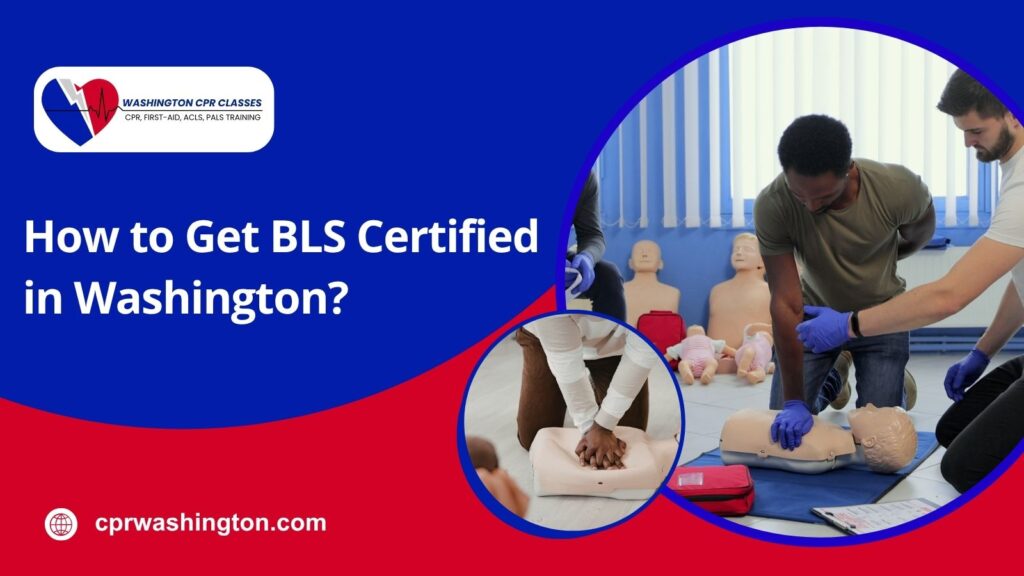
Traditional classroom courses combine instructor-led lectures with practical hands-on skills training. Students practice CPR techniques, AED operation, and team-based resuscitation before completing the required skills assessment.
This format is ideal for:
- First-time students
- Individuals who prefer in-person instruction
- Participants who benefit from direct instructor feedback
Blended Learning
Many training providers offer a blended learning option that combines online coursework with an in-person skills evaluation.
Students complete the cognitive portion online at their own pace before attending a scheduled skills session where they demonstrate CPR, AED, and airway management techniques.
This format provides greater flexibility while still meeting the hands-on competency requirements expected by most healthcare employers.
Step 3: Register for Your BLS Course
Once you’ve selected a provider and course format, complete your registration by choosing a class date that fits your schedule.
When comparing courses, consider factors such as:
- Course location
- Available class times
- Tuition and fees
- Included study materials
- Certification card delivery timeline
- Employer acceptance
Many Washington training centers offer weekday, evening, and weekend classes to accommodate working professionals and students.
Step 4: Complete the Required Training
During your BLS course, you’ll develop the knowledge and practical skills needed to respond effectively during medical emergencies.
Training typically includes:
- Adult CPR techniques
- Child CPR
- Infant CPR
- AED operation
- Rescue breathing
- Bag-mask ventilation
- Choking relief
- High-performance team CPR
- Recognition of cardiac arrest
- Emergency communication and teamwork
Students participate in realistic practice scenarios that help reinforce these lifesaving skills before the final evaluation.
Step 5: Successfully Complete the Skills Evaluation
To earn your certification, you must demonstrate that you can correctly perform the required BLS skills.
The evaluation typically includes:
- Adult CPR
- Infant CPR
- Child CPR
- AED use
- Choking relief
- Team-based resuscitation scenarios
Some courses also include a written or online knowledge assessment to ensure students understand the concepts taught during training.
Step 6: Receive Your BLS Certification Card
After successfully completing all course requirements, you’ll receive your BLS certification card, which serves as proof that you have completed an approved Basic Life Support course.
Many providers issue digital certification cards shortly after successful completion, allowing participants to share their credentials with employers, schools, and licensing organizations.
Who Needs BLS Certification in Washington?
BLS certification is essential for healthcare professionals and anyone who may need to respond to a life-threatening emergency. While it is commonly required for healthcare jobs, individuals who want to learn lifesaving skills and be prepared to help during cardiac arrest, breathing emergencies, or other critical situations can also benefit from BLS training.
Professionals and individuals who commonly need or benefit from BLS certification include:
- Registered Nurses (RNs) and Licensed Practical Nurses (LPNs): Many hospitals and healthcare facilities require BLS certification as part of employment and clinical requirements.
- Physicians and Physician Assistants: Helps ensure they can provide immediate lifesaving care during emergencies.
- EMTs and Paramedics: Provides essential skills for emergency response, patient care, and transportation situations.
- Medical Assistants: Supports safe patient care in clinics and healthcare settings.
- Dentists and Dental Hygienists: Helps them respond to medical emergencies that may occur during dental procedures.
- Respiratory, Physical, and Occupational Therapists: Prepares them to handle emergencies while caring for patients.
- Pharmacists: Equips them with emergency response skills that may be needed in healthcare environments.
- Healthcare Students: Nursing, medical, and allied health students often need BLS certification before starting clinical training.
- Childcare Providers and Teachers: Useful for responding to emergencies involving children and infants.
- Coaches, Fitness Professionals, and Trainers: Helps them handle medical emergencies during physical activities.
- Caregivers and Family Members: Provides confidence to assist loved ones during sudden cardiac or breathing emergencies.
- Anyone Interested in Saving Lives: BLS training is valuable for anyone who wants to learn CPR, AED use, and emergency response skills.
Which BLS Certifications Are Accepted in Washington?
Washington State does not issue its own BLS certification or mandate a single training provider. Instead, employers, healthcare facilities, and educational institutions determine which certifications they accept. The American Heart Association (AHA) BLS Provider Course is one of the most widely recognized and accepted certifications throughout Washington. It is commonly required by hospitals, healthcare systems, nursing schools, dental offices, and emergency medical services because it follows evidence-based resuscitation guidelines and includes a hands-on skills evaluation.
Some employers may also accept certifications from other nationally recognized organizations, such as the American Red Cross. However, acceptance policies vary by employer and educational institution. Before registering for a course, always confirm which certification your employer, licensing board, or school requires. Choosing the correct provider helps avoid delays and ensures your certification meets professional requirements.
How Long Does It Take to Get BLS Certified?
Getting BLS certified is usually a quick process that can be completed within a few hours. Most BLS courses take approximately 3 to 5 hours to complete, depending on the training format, provider, and whether you are taking an initial or renewal course.
The time required may vary based on:
- Course Format: In-person classes typically include instructor-led training and hands-on practice, while blended courses allow you to complete the online portion at your own pace before attending a skills session.
- Previous Experience: Healthcare professionals with prior CPR knowledge may find renewal courses faster than first-time certification.
- Skills Assessment: The hands-on evaluation requires participants to demonstrate proper CPR techniques, AED use, and emergency response skills.
How Much Does BLS Certification Cost in Washington?
The cost of Basic Life Support (BLS) certification in Washington varies depending on the training provider, course format, certification type, and what is included in the course fee. On average, participants can expect to pay around $60 to $110 for an initial BLS Provider certification, while renewal courses may cost slightly less.
Can You Take BLS Certification Fully Online?
BLS certification is generally not available as a fully online course for healthcare professionals because it requires hands-on skills evaluation. Participants must demonstrate essential skills such as CPR, AED use, and emergency response techniques in person.
Many providers offer blended BLS courses, which combine online learning with an in-person skills session. This format allows you to complete the educational portion online at your own pace and then demonstrate practical skills with an instructor. Before enrolling, check with your employer, school, or healthcare organization to ensure the course format meets their BLS certification requirements.
How Long Is BLS Certification Valid?
A Basic Life Support (BLS) certification is typically valid for two years from the date of successful completion. This two-year validity period applies to most American Heart Association (AHA) BLS Provider certifications, which are widely accepted by healthcare employers, hospitals, educational institutions, and professional organizations throughout Washington.
During the certification period, healthcare professionals and students can use their BLS credential to demonstrate that they have current training in essential lifesaving skills, including CPR, AED use, and emergency response techniques.
How to Choose the Best BLS Training Center in Washington
Choosing the right BLS training center in Washington ensures that your certification is recognized and that you receive proper hands-on training. Before enrolling, consider factors such as course quality, instructor experience, certification acceptance, and convenience.
Look for these key factors when selecting a BLS training provider:
- Certification Acceptance: Choose a training center whose BLS certification is accepted by your employer, healthcare facility, school, or licensing program.
- Hands-On Skills Training: Ensure the course includes practical skills evaluation for CPR, AED use, and emergency response techniques.
- Flexible Course Options: Look for options such as in-person classes, blended learning, and renewal courses that fit your schedule.
- Updated Training Materials: Choose a provider that follows current CPR and resuscitation guidelines.
- Convenient Location and Scheduling: Consider training centers that offer accessible locations, weekend classes, or flexible appointment times.
- Transparent Pricing: Compare course fees and check whether materials, certification cards, and skills testing are included.
Benefits of Becoming BLS Certified
BLS certification provides essential lifesaving skills that prepare healthcare professionals and individuals to respond quickly during cardiac arrest, breathing emergencies, and other critical situations. It not only helps meet workplace requirements but also improves confidence, emergency readiness, and patient safety.
Some key benefits of becoming BLS certified include:
- Learn Essential Lifesaving Skills
BLS training teaches important skills such as CPR, AED use, rescue breathing, and emergency response techniques that can help save a life before advanced medical care arrives.
- Improve Confidence During Emergencies
Proper training helps you stay calm and take the right actions when responding to a life-threatening situation.
- Meet Healthcare Job Requirements
Many hospitals, clinics, and healthcare organizations require employees to maintain an active BLS certification as part of their professional qualifications.
- Increase Career Opportunities
BLS certification can strengthen your resume and support career opportunities in healthcare, emergency response, and patient care fields.
- Enhance Patient Safety
Certified individuals are better prepared to provide immediate and effective care, improving outcomes during medical emergencies.
- Develop Teamwork and Communication Skills
BLS courses teach coordinated emergency response techniques, helping teams work together efficiently during critical situations.
Start Your Washington BLS Certification Today
Getting BLS certified in Washington is an important step for healthcare professionals, students, caregivers, and anyone who wants to be prepared for life-threatening emergencies. By completing a recognized BLS course, you can gain essential skills in CPR, AED use, and emergency response while meeting workplace or educational requirements. Choosing the right training provider and keeping your certification current ensures you remain confident and ready to act when someone’s life depends on your response.
If you’re ready to take the next step toward becoming BLS certified, CPR Washington, powered by CPR VAM, provides trusted American Heart Association (AHA) certification training tailored to your needs. Backed by over 22 years of experience, CPR Washington delivers hands-on instruction, flexible scheduling options, and advanced Voice-Assisted Manikin (VAM) technology to help you build real-world confidence. Enroll today to complete your BLS certification with expert guidance and receive your AHA digital certification card after successfully finishing the course.